Prelude to a Revolution, Ode to a Sleeping FERC

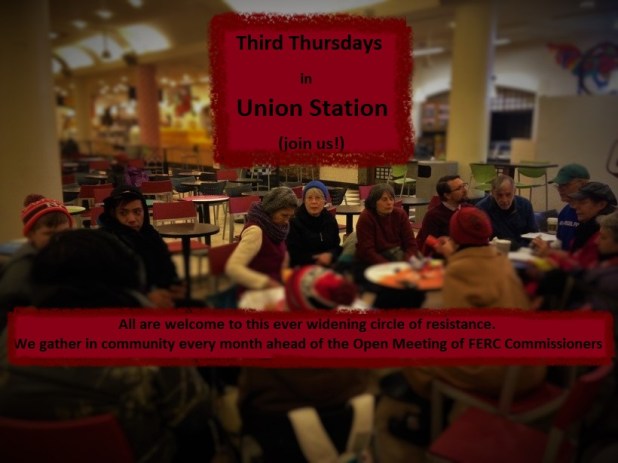
Every third Thursday, the morning bustle of Washington, DC’s Union Station plays host to a monthly prelude. Small tables are haphazardly pulled together and the 8am ritual commences. Gathered in a circle and passing around food and coffee, we plan our next round of unwelcome Truth Injections. The objective–to crack a little known but terribly powerful entity near the heart of the Fracked Gas Empire. This entity is frightening, but it houses no monsters. Instead, it houses something far more grotesque–a form of unacknowledged violence persisting under a bureaucratic veneer. Some call it the Federal Energy Regulatory Commission (FERC). I call it the worst kind of nightmare.

Typical Morning

Captive to the fracked gas industry and rubber-stamping virtually every project that comes before it, FERC inspires goosebumps in the night. Every permit for fossil fuel infrastructure that FERC issues is an act of violence perpetrated against the people and the planet, poisoning local communities, and polluting the global climate.


The circle of those standing up to say no grows.


Last month, five people took turns standing up and speaking out at the public meeting FERC commissioners are required to convene every third Thursday.

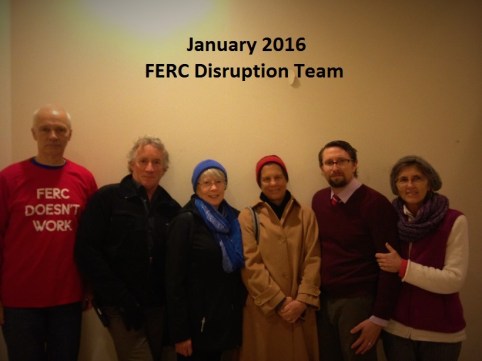
Jan 2016 FERC Team

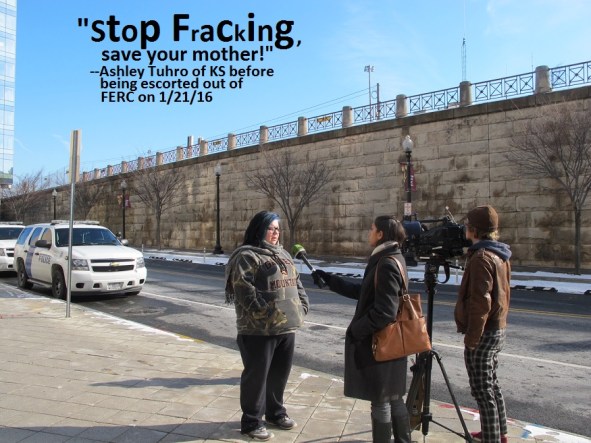
In January, those people were Ashley Tuhro from Wichita, Kansas, Carol Cutler from Pittsburg, Pennsylvania, Betsy Conover from Pennsylvania, Tim Spiese from Pennsylvania, and Drew Hudson from South Carolina.

RT America reported on what happened. Hear from Kendall Hale, Tim Spiese, and Ashley Tuhro.


Tim was first to stand up in the meeting room. Here’s what he had to say about FERC: “They segment everything, so they look at one pipeline and think ‘no problem, it’s not going to harm anything.’ But if they were to do what they’re supposed to do and look at all the pipelines, consider the fracking, the damages that fracking does, consider the impact economically to the country, environmentally to the country and the world, and consider that whole ball of wax, it’s a no brainer.”

Thanks to Ashley, we have some footage from inside FERC. Take a look. Here, Carol is taken from the room for calling on the commissioners to put people over profits.


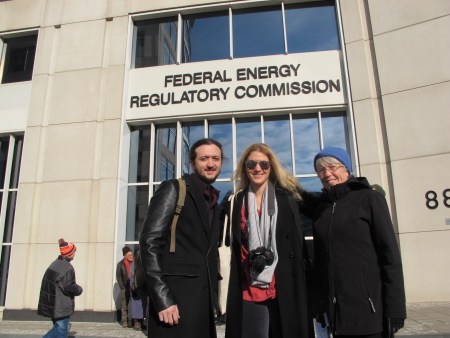
After the meeting, Carol  was met outside by Lee Camp (host of Redacted Tonight) and Eleanor Goldfield (host of Act Out), who both attended the meeting to witness and document the actions.

IMG_6974

Of the day’s FERC meeting, Eleanor wrote “The meeting began with a circle-jerk style ceremony including a congratulatory plaque awarded to some guy for doing something completely unrelated to the day’s proceedings. Then, the members of the Commission, including Chairman Norman C. Bay, took turns congratulating each other on being awesome, informing the room that they like football, just got a twitter account and isn’t the work we do just so awesome!? It sounded like the sort of banal conversation you might hear made fun of in an episode of The Office, but these people were supposedly here to discuss the FUCKING ENERGY CONCERNS OF OUR NATION!” Read more here.

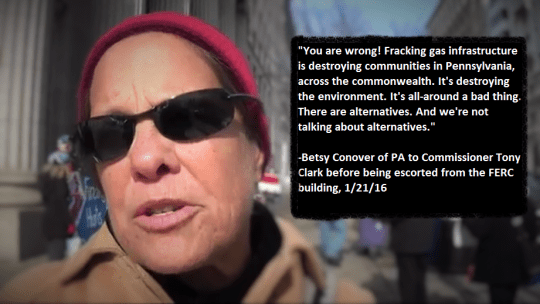
Betsy was taken out in a similar fashion.


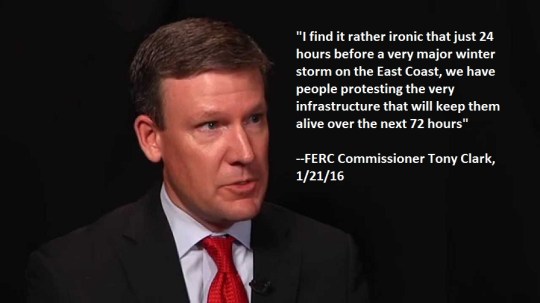
The below exchange happened between Betsy and outgoing FERC Commissioner Tony Clark before she was made to leave.

maxresdefault

untitled


Read more about this exchange and the action as a whole from DC Media Group.

Drew Hudson of South Carolina had powerful words as well: “Last month 195 nations, including the government that this commission is supposed to work for, agreed that climate change is an imminent threat, and that global warming must be capped at 1.5-2 degrees celsius. To do this we must keep 80% of fossil fuels in the ground. By continuing to approve fracked gas infrastructure, you are perpetuating what Bill McKibben calls “Zombie fossil fuels” that will stay in operation for more than 40 years and doom our climate – causing the loss of many lives and livelihoods as a result of climate chaos. I urge this commission to stop approving the problem, stop fracked gas infrastructure and work with impacted communities to rapidly invest in a just energy democracy for all.”

The last people out of the room were Ashley Tuhro and her two kids, who came all the way from Witchita, Kansas, where fracking is causing earthquakes.

IMG_6976


Once a person speaks out at FERC, they’re not permitted to return to the meeting room itself. Presumably due to sunshine laws, however, they are permitted into an overflow room adjacent to the main meeting room. In January, a group of folks gathered in the overflow room to sound the alarm on a sleeping FERC.


Afterwards, a successful crew gathered outside for chants.


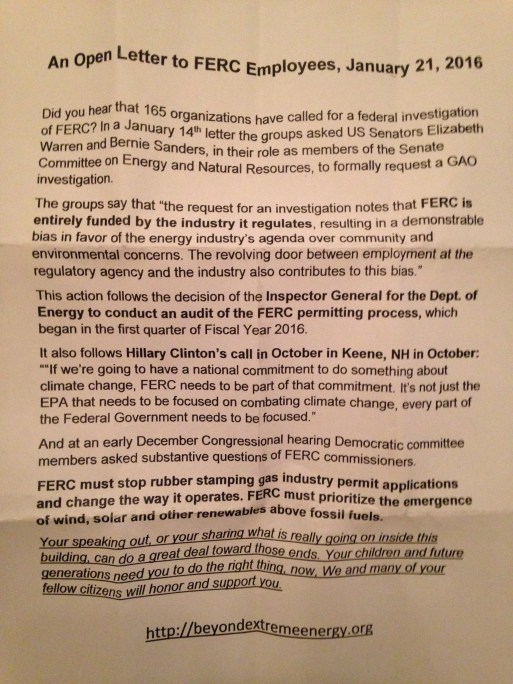
Throughout the whole morning, others stood outside FERC handing FERC employees an open letter, pictured below. It was about the effort Delaware Riverkeeper Network is leading to get US Senators Elizabeth Warren and Bernie Sanders to request a GAO investigation of the agency. For more information and to add your name and organization to the letter, click here.


image1


Please join us for one of the upcoming actions at FERC in Washington, DC. They’re held the third Thursday of every month. If you’d like to receive updates, sign up here.

Fade

The Truth FERC Fears to Face

IMG_6391

Despite attempts to bar truth-telling voices from their monthly public meetings at the Federal Energy Regulatory Commission (FERC), the agency’s commissioners were once again forced to look at the pain and suffering their permits are inflicting on people all over the country.

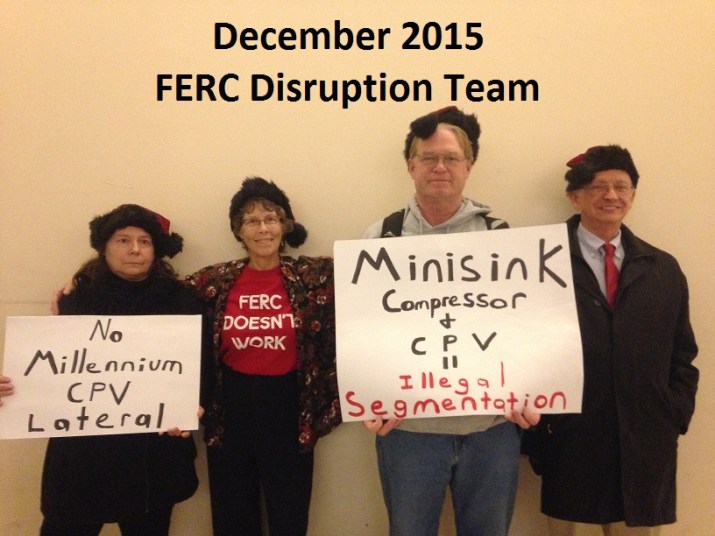
At the December 17th public commissioners meeting at FERC, two people managed to inject substance into what was otherwise part of an ongoing charade.

Minisink Pic @ FERC

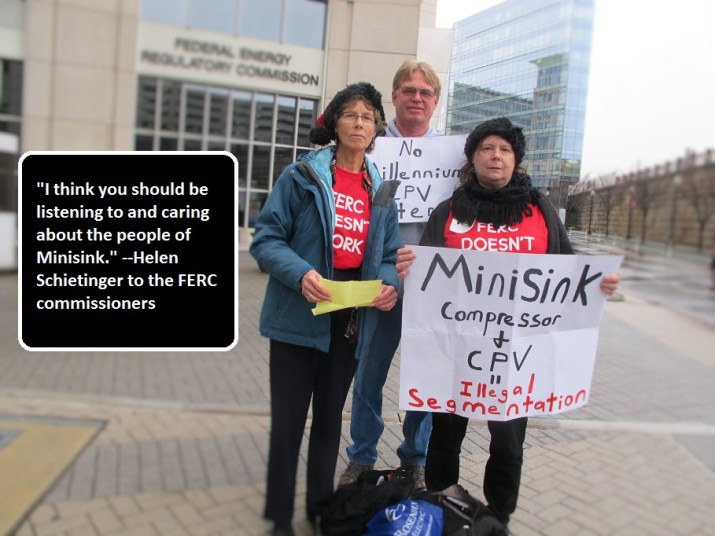
“This is a very nice love fest,” said Helen Schietinger as she rose to her feet on the floor of the meeting room, interrupting the commissioners who were in the middle of saying nice things to each other. “But,” she continued, “I think you should be listening to and caring about the people of Minisink.”


The paragraph Helen read in the above video came from Pramilla Malick in Minisink, New York, and was directed at FERC for this specific meeting.

Pramilla wrote: “Four years ago Minisink residents came to FERC seeking justice and what they got was a toxic compressor station that is now making children sick and forced many families to flee. Minisink is now a community under siege. The Millennium CPV lateral is a blatant case of illegal segmentation. If you approve this lateral pipeline you will demonstrate the egregious excess of this industry and the lawlessness of FERC actions. Minisink is the line in the sand. The American people will no longer be sacrificed to feed the greed of the fossil fuel industry. Minisink is our town. Minisink is every town.  We will amplify their story, and not stop until FERC stops fracking the American people.”

Minisink is fighting today as children get sick and families are forced to leave their homes. Now, Pramilla tells us, they are up against a massive 650 MW gas-fired power plant– the CPV Valley project. This plant would emit 2.1 million tons of greenhouse gas emissions annually and support 22 Pennsylvania fracking wells per year.

This is the truth FERC fears to face.

IMG_6405.PNG

Pete MacDowell was in the meeting as well. The message he prepared for the disruption, which got him whisked quickly from the meeting room, was straightforward and directed.  “Excuse me,” he said. “Have you read that 187 nations have committed themselves to phasing out fossil fuels as quickly as possible for the sake of humanity? Ask yourself, what side are you on–humanity’s, or the industry’s? Ask your heart. Ask your soul. Ask your children. Will you have the moral courage to stand up and be the first to listen to your conscience and say I am on the side of humanity?”

These words–these truths about what’s going on in Minksink–they may be too painful for Commissioners Bay, LaFleur, Honorable, and Clark to hear.  But if the horror of what they do is too blinding now, how the more blinding it will be in the future. Never mind that more and more people are actually living that horror everyday.

A dash of courage and immense love of people, place, and community are needed in these stygian times.

Bob Gardiner, who was also kicked out of the meeting for trying to film, joined Ellen and Helen for a FERC and fracking-inspired rendition of Jingle-Bells, for when they come after us with violence and blind force, we come back with truth and mobilized spirit.


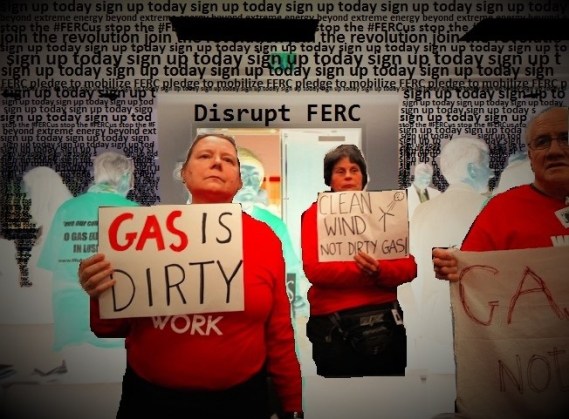
If you’re interested in joining the effort to inject truth into FERC’s monthly meetings, please fill out the FERC Pledge to Mobilize and someone will be in touch about organizing the next disruption.

https://docs.google.com/forms/d/1U1zXQ0XMUFqScgIP6Ntmo1f1Uwjr4wQpTQPlvfvwUaU/viewform?usp=send_form


Homework

by Greg Yost

Reposted from The Teacher’s Edition, the staff/faculty newspaper of Madison Early College High School in Mars Hill, NC.

BXE’er Greg Yost is a math teacher at MECHS and wrote the following to explain his recent arrest at an Asheville, NC Exxon station to his students.

(For easier reading, click the icon in the lower right corner below to view full screen on the Scribd website.)

AntiTPP advocates to blockade US Trade Rep Monday morning

FOR IMMEDIATE RELEASE

November 15, 2015

FOR FURTHER INFORMATION

Kevin Zeese 301-996-6582, KBZeese@gmail.com

Evan Greer, 978-852-6457, press@fightforthefuture.org

TPP Protest in Washington, DC on Monday, November 16 to Blockade US Trade Rep

Kick Off of Campaign to Stop Unpopular Corporate Power Grab

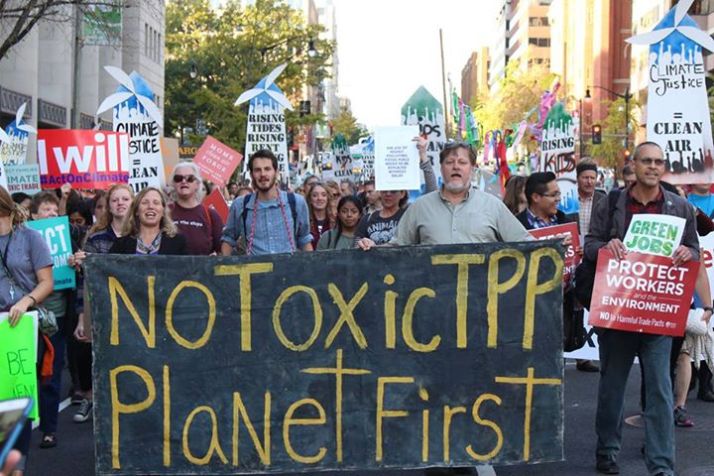
WASHINGTON, DC – A coalition of 63 organizations will hold a series of spectacle actions at multiple sites in Washington, DC to escalate a campaign that will stop the Trans-Pacific Partnership.

The events will begin on November 16th and go through November 18th.  See Call to Action for #FallRising to Stop TPP, TTIP, & TiSA.

The first event will be held at the US Trade Representative building on 17th Street, NW between F and G. It will begin at Farragut Square at 8 AM and then move to the US Trade Representative at 8:30 AM where activists plan to blockade the building in a protest focusing on “TPP Equals Betrayal.”  Opponents to the TPP will focus on how the TPP betrays healthcare, workers and unions, family farms and safe food, the future of our planet and the future of the Internet. 

To follow the protest on twitter follow #TPP, #StopTPP and for a live feed of the action visit @StopMotionsolo

Beginning at 4:30 PM, people will meet outside the US Chamber of Commerce near Lafayette Park for a march through the city. This march will feature luminary toilet paper roles.

The focus of the protests during the rest of the week will be the US Trade Representative, lobbyists for transnational corporations, the White House and Congress. Below is a schedule for the week.

Schedule for Fall Rising Protests Against the TPP

Monday, November 16

8AM – SHUT DOWN the USTR! March to US Trade Rep will begin at Farragut Square and march to US Trade Representative building at 600 17th NW.

4:30 pmMASS ACTION/MARCH for TRADE JUSTICE! Begins at the Chamber of Commerce 1615 H St., NW for Mass Action/March and Rally to stop the TPP.

Tuesday November 17

11 am – Begins at DuPont Circle for the World is Rising International Solidarity march up Embassy Row! Stops at embassies of countries who are part of the TPP.

5 pm – Hackathon at First Trinity Lutheran Church, 4th and E Sts., NW.  CLICK HERE to learn more about the Hackathon.

Wednesday, November 18

Morning – More actions to be announced.

12 pm – Petition delivery to Congress and possible press conference

Afternoon-Evening — Protest the Dominion Cove Point gas export terminal and refinery being constructed across the street from a residential community in Calvert County, MD. We will travel to the community to join We Are Cove Point and Calvert Citizens for a Healthy Community for no gas exports! Why? TPP and TTIP would increase the export of fracked gas from the US to Japan (TPP) and the EU (TTIP), making it harder to stop gas export (and fracking upstream).

TPP_Toxic

#StopTPP #NoTPP #KillTPP #FlushTheTPP #FloodtheSystem

Fracktivists With Divestment Message Perform Sky-High Rappel In Bank of America Stadium

Daring banner drop protests Bank of America’s investment in fracked gas export terminal at Cove Point, Maryland

by Anne Meador, reposted from www.dcmediagroup.us

Photo @CarPanthersNews/Twiiter

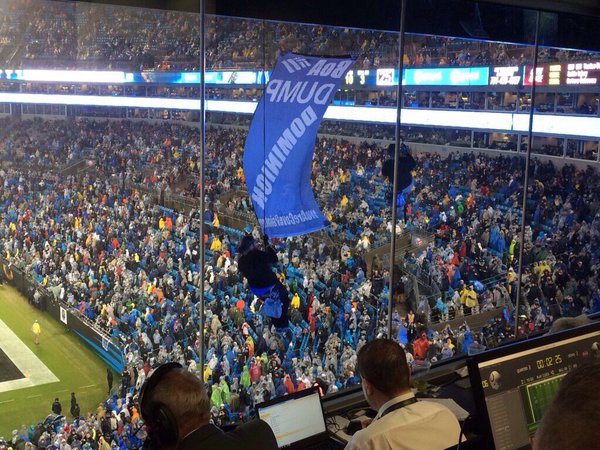
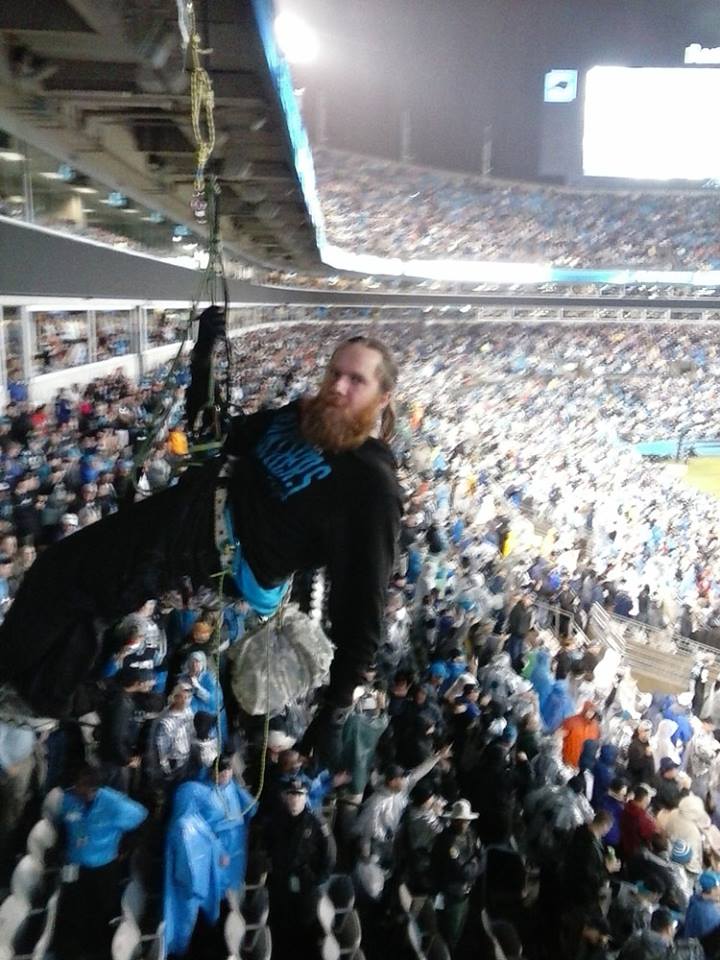
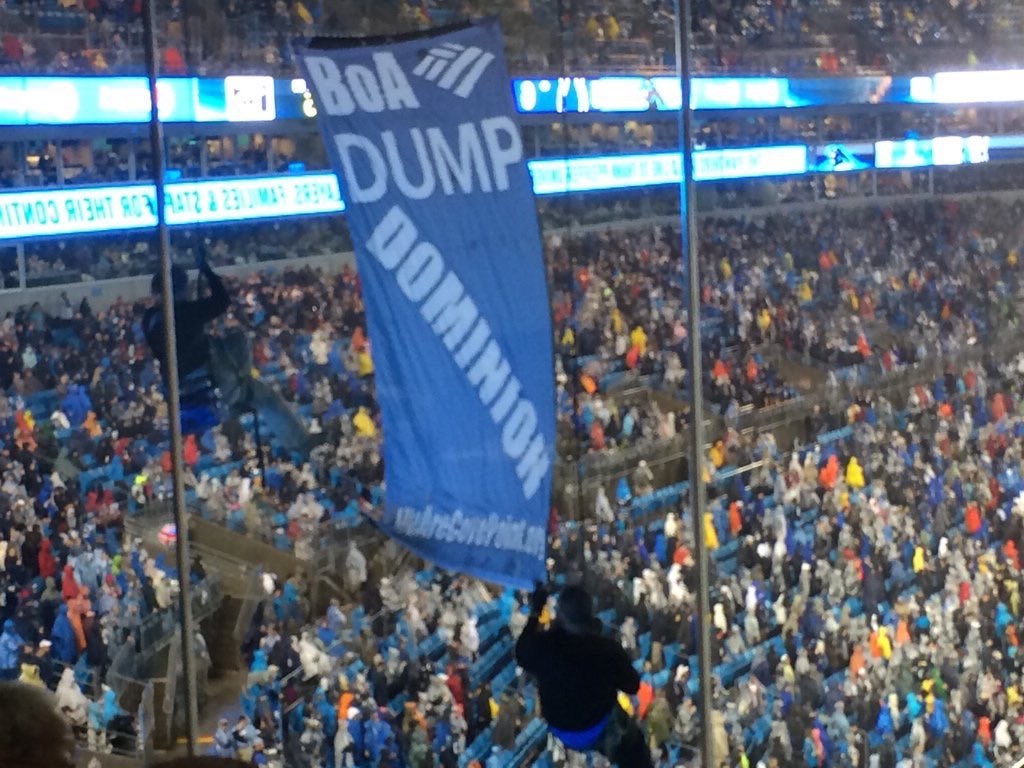
As many as 74,000 football fans at a Carolina Panthers game witnessed two people rappel from the upper deck in the pouring rain. They suspended themselves in front of the press box and unfurled a banner from the railing above which read, “BoA: Dump Dominion, WeAreCovePoint.org.” The stunt was broadcast live on Monday Night Football, which had an audience of 12 million last week.

Carried out during one of the biggest match-ups of the season between the Panthers and the Indianapolis Colts, the banner drop was designed to shame stadium sponsor Bank of America for its financial backing of a gas liquefaction project on the Chesapeake Bay.

Dominion Cove Point, now under construction, is poised to become one of the first LNG terminals in the United States to export natural gas. It is so far the only terminal geographically situated to export gas produced by the expanding hydraulic fracking industry of the Marcellus Shale.

VIDEO of rappellers and banner drop

A press release by organization We Are Cove Point identifies the rapellers as Rica Madrid and John Nicolson. “Bank of America is financing the Cove Point LNG plant, and the surrounding community in Southern Maryland is forced to bear the human cost,” Nicolson is quoted in the press release. “This is unacceptable.”

Photo: We Are Cove Point/Flickr

Cove Point LNG’s parent company, Dominion Resources, has been trying to raise the necessary $3.8 billion to get the terminal up and running. Bank of America is one of Dominion’s major backers. It owns shares worth more than $623 million, loaned Dominion $380 million in 2013 alone, and bought $275 million in bonds largely dedicated to capitalizing the Cove Point LNG venture.

Although the natural gas and LNG markets are weathering tough times, Dominion Cove Point could still be a gold mine because of the contractual agreement with its two customers. No matter how much gas they ship, GAIL Ltd. and Sumitomo Corporation must pay the same toll to Dominion.

But that gold mine sits on a powderkeg of 14.6 bcf of LNG, 410,000 gallons of propane and two 87-megawatt combustion turbines squeezed into the existing 130-acre site. Nearly 2,500 residents live within one mile of the terminal and could bear the brunt of a potential massive industrial catastrophe in their neighborhood.

A local Assistant Fire Chief, Mickey Shymansky, even resigned in protest because he believes emergency responders would be unable to handle an LNG conflagration. “This place is sounding the alarms on so many different levels,” Shymansky said in an interview. “They’re allowing themselves to build the perfect storm.”

Photo: We Are Cove Point

The high level of emissions produced by the plant is also a concern. Dominion Cove Point will become the fourth largest polluter in Maryland, producing 20.4 tons of toxic and cancer-causing pollutants each year. Environmentalists point out that the lifecycle emissions of LNG export, from fracking well to the ultimate destination in Asia or Europe, are worse than coal. Recent studies have shown that emissions of methane, a potent greenhouse gas, exceed previous estimates.

This isn’t the first daring maneuver designed to draw attention to Dominion. Last February, two activists climbed the arm of a crane and dropped a banner at a construction site; they were subsequently convicted of trespassing.

shot-2015-11-02_20-49-41-1024x810

CS2-RZ4UcAEI6ed

PRESS RELEASE: Bank of America Stop Funding Dominion LNG Project

For Immediate Release

Monday, November 2

Contact: Kelly Canavan, (301) 237-5040

Hi-res photos available at: http://www.flickr.com/photos/boadumpdominion

Activists Suspended From Upper Deck of Stadium During Monday Night Football to Protest Bank of America Financing of LNG Export Terminal 

We Are Cove Point demands Bank of America stop financing Dominion’s Cove Point LNG export terminal and other fracked gas infrastructure

flip

CHARLOTTE, NORTH CAROLINA — In protest of Bank of America’s role in financing the planned liquefied natural gas (LNG) export facility in Cove Point, Maryland, activists from We Are Cove Point have suspended themselves from the upper deck of Bank of America Stadium during the Monday Night Football game between the Charlotte Panthers and the Indianapolis Colts. They dropped a banner that reads, “BoA: Dump Dominion, WeAreCovePoint.org,” that was seen by the stadium audience of more than 70,000 people.

Bank of America (NYSE: BAC) has played a major role in financing Dominion Resources (NYSE: D) and its $3.8 billion LNG export facility at Cove Point through Dominion Midstream (NYSE: DM). Bank of America is part of a consortium of banks that is lending Dominion up to $4 billion to finance several planned gas infrastructure projects. In June 2013, Bank of America also underwrote $275 million to contribute to the capital expense of the Dominion Cove Point facility. We Are Cove Point activists are now calling on Bank of America and other lending institutions to stop financing Dominion.

Since oil and gas prices have plummeted, industry experts have increasingly seen LNG export facilities as bad investments, and the financial sector has been inexplicably propping up the gas industry. As recently as August, a report from Bank of America itself warned that plummeting crude oil prices have hurt the prospects of LNG export projects. President and CEO Zin Smati of Engie’s GDF Suez Energy North America said, “You cannot ship gas from the United States anymore. … Nobody really is making money from LNG now. Certainly, we are not.”

Dominion Cove Point is a proposed LNG export terminal that is slated to send up to 1.8 billion cubic feet of LNG to Japan and India. The facility would be the only one in the world to be built in a densely populated area, in violation of basic safety siting standards. It would drive demand for harmful fracking across the Mid-Atlantic, emit more than 20 tons of hazardous air pollutants each year, and spew two million tons of greenhouse gases, making it Maryland’s fourth-largest climate polluter. LNG exports are predicted to increase domestic gas prices, resulting in economic loss for every major sector of the US economy besides the gas industry, according to a Navigant Consulting report commissioned by Dominion Cove Point and a NERA economic consulting report commissioned by the U.S. Department of Energy.

As more communities organize against the encroachment of gas infrastructure, Bank of America and other lending institutions are facing increasing pressure to stop financing dirty energy projects that negatively impact the lives and well-being of those living near export terminals, pipelines, compressor stations, fracking wells and gas-fired power plants.

A broad, strong coalition of people has been actively resisting Dominion Cove Point at every step since the fall of 2013. We Are Cove Point is a leading part of the effort to stop Dominion Cove Point and reclaim the Cove Point community from Dominion’s grip.

Participants in tonight’s action made the following comments:

Bank of America is allowing companies like Dominion to operate without checks and balances,” said John Nicholson. “They are giving money directly to Dominion with full knowledge of the health and safety risks of building an LNG export facility, and they need to be accountable to that.”

Rica Madrid said, “America doesn’t need more cheap fuel on the market, and we especially don’t need to export those resources overseas. Dominion is building a facility that would contribute to the economic crisis our country is facing. Bank of America is financing the Cove Point LNG plant, and the surrounding community in Southern Maryland is forced to bear the human cost. This is unacceptable.”

For more information, visit WeAreCovePoint.org and DumpDominion.org.

This Game Is Rigged

Screen Shot 2015-10-15 at 3.44.14 PMby Anne Meador of DCMediaGroup

FERC Commissioner Philip Moeller attended his last public meeting yesterday before he quits the agency at the end of the month. The White House has not yet nominated a replacement.

Moeller may have given us a little insight into just what kind of person presides over electrical utility markets and interstate gas infrastructure permits. If they’re anything like Moeller, they’re not just bureaucrats–they’re GEEKS.

Screen Shot 2015-10-15 at 3.48.39 PMLast March, Commissioner Moeller thrilled his Twitter followers while indulging in an ultra-geek fantasy: He photoshopped himself into a promotional poster for the hit TV show “Game of Thrones,” altering it into an invitation to a FERC technical conference.

Moeller sits on the “Iron Throne,” wearing leather jacket, gloves and boots and clutching a sword. His bespectacled face replaces brooding actor Sean Bean in the original.

Like any geek, Moeller gets in as many references as possible in his Tweet, as well as a self-deprecating pun about his receding hair line!

@PMoellerFERC In honor of @ErnestMoniz, hair is some encouragement to attend FERC’s Eastern regional tech conf on 111d.


(Ernest Moniz is the Secretary Energy and well-known for his thick hair cut in a bob. The long hair in the photo surpasses Moeller’s own.)

The text of the photo reads:

GAME OF REGULATIONS
WINTER IS HERE AND SO IS THE EPA’S RULE.
YOU CAN SEND A RAVEN.

BUT THE HOUSE OF MOELLER ENCOURAGES YOU TO ATTEND FERC’S TECHNICAL CONFERENCE TO DISCUSS THIS MATTER.

“Game of Regulations” sounds like a pretty accurate way to describe FERC’s rigged process, but we never expected a Commissioner to admit it.

Maybe Moeller should think twice before he leaves FERC. He may never rule from an Iron Throne like that again.

700-1

Environmental groups burn bridges with gas industry at press conference

from SNL 10/01/2015

america_energy_agenda_WGL_meme

Environmental groups burn bridges with gas industry at press conference

Gone are the days where the Sierra Club might try to work with the oil and gas industry to limit its impact on the environment.

Representatives from its Dirty Fuels Campaign and a group spawned out of opposition to Keystone XL made clear at an energy policy event in Washington, D.C. on Oct. 1 that there is little or no common ground left between their organizations and energy producers.

“The science is increasingly coming up that climate change is here, we’re feeling the impacts, they are just going to get worse, and we need to act quickly and boldly,” Lena Moffitt, director of the Sierra Club’s Dirty Fuels Campaign, said at the event. “What that means is we leave the vast majority of fossil fuels in the ground.”

Moffitt said climate change “is the frame in which we need to make all of our energy infrastructure decisions going forward,” which means stopping new pipelines from being built and leaving untouched 80% of the remaining coal reserves, 50% of the remaining gas reserves and 30% of the remaining oil reserves.

Pipelines lock us into the energy of the past,” said Jane Kleeb, founder of the advocacy group Bold Nebraska that has fought TransCanada Corp.’s Keystone XL oil pipeline project. Furthermore, she said, through the use of eminent domain, “the energy companies come in and take [people’s] land against their will.”

“Do we use natural gas and oil now? Yes. Do we need to continue to build infrastructure that locks us into that energy of the past that also rips our land and water? Absolutely not,” Kleeb said. “And we’ve changed the game. Citizens like me, citizens like Lena … we’ve changed the energy game and we’re not going to back down.”

The approach confounded a gas industry leader and a Republican U.S. senator at the same Oct. 1 Politico news event sponsored by WGL Holdings Inc. They said common ground could be found with environmental groups and landowners on issues ranging from climate change to the use of eminent domain.

Marty Durbin, president and CEO of America’s Natural Gas Alliance, said the U.S. must use all its energy resources. “What is our energy future here?” he asked. “How are we going to take advantage of all the fuel sources we have? From a natural gas standpoint, we have an opportunity — not only with the abundance of natural gas here, but the ability to provide cleaner air, cleaner energy, drive economic growth for the country, and also enhancing our energy security, both here and abroad.”

“We’ve got to have pipeline expansions to be able to do that,” Durbin continued. “And the communities the pipelines are going through — of course they are going to have questions and concerns, and we’ve got to be part of that dialogue. But I think unfortunately we’ve gotten into a conversation that starts and ends with ‘we don’t want them.'”

Speakers touch hot topics

The two factions were on opposite ends of their energy infrastructure panel at the Politico event. Durbin and Sen. John Hoeven, R-N.D., are working to improve a permitting system that, while it might be slow going in the eyes of gas infrastructure developers, generally works for them. The speakers took the high road and expressed an interest in dialogue.

Moffitt and Kleeb, facing a U.S. permitting system that mostly lets projects go forward over their objections, were more willing to lob incendiary comments that set fire to the idea of the two sides ever working together.

Hoeven, the author of legislation to streamline cross-border energy projects, agreed with Kleeb that it was important to treat landowners well, and energy companies should use eminent domain carefully. The senator pointed out that new pipelines would prevent oil and gas producers from flaring gas in production regions that currently lack infrastructure. And he pointed out that no matter what energy resources the U.S. chooses, even renewable energy sources, transmission infrastructure will have to be built.

“You still have the issue of dealing with landowners,” Hoeven said. “That’s not going to go away, regardless of your fuel choice.”

“Right, but some of the energy sources are poisonous,” Moffitt said, and some are not.

Durbin objected to that description. He said the U.S. has hundreds of thousands of miles of major pipelines in place. “We don’t have a poisonous wasteland around the country,” he said.

Hoeven said the U.S. needs to encourage investment in energy by, among other things, providing certainty in regulation. For renewables and traditional sources, he said, “if we continue to empower investment both in energy production and in infrastructure, we will get more energy, better environmental stewardship” and make the market more safe and more efficient, and other countries will then adopt the new technology.

“That’s been the hallmark of America,” Hoeven said. “We are the entrepreneurs, we’re the investors, we’re the inventors, we’re the innovators.”

In the end, the belief in U.S. innovation was one all the speakers could share.

“Like Sen. Hoeven, I believe in an America that is innovative and entrepreneurial, and I think in the face of the greatest crisis the planet has ever known … America will lead the way into the clean energy future,” Moffitt said, noting such technological advances as battery storage. “I think we can get there.”

https://www.snl.com/InteractiveX/article.aspx?ID=34047784&KPLT=4

http://www.politico.com/events/2015/10/americas-energy-agenda-whats-next-213895

Pope Francis Comes to the Capital, FERC Protests Escalate

IMG_4711by Gabriel Shapiro, Hampshire College, gabeshapiro42@gmail.com

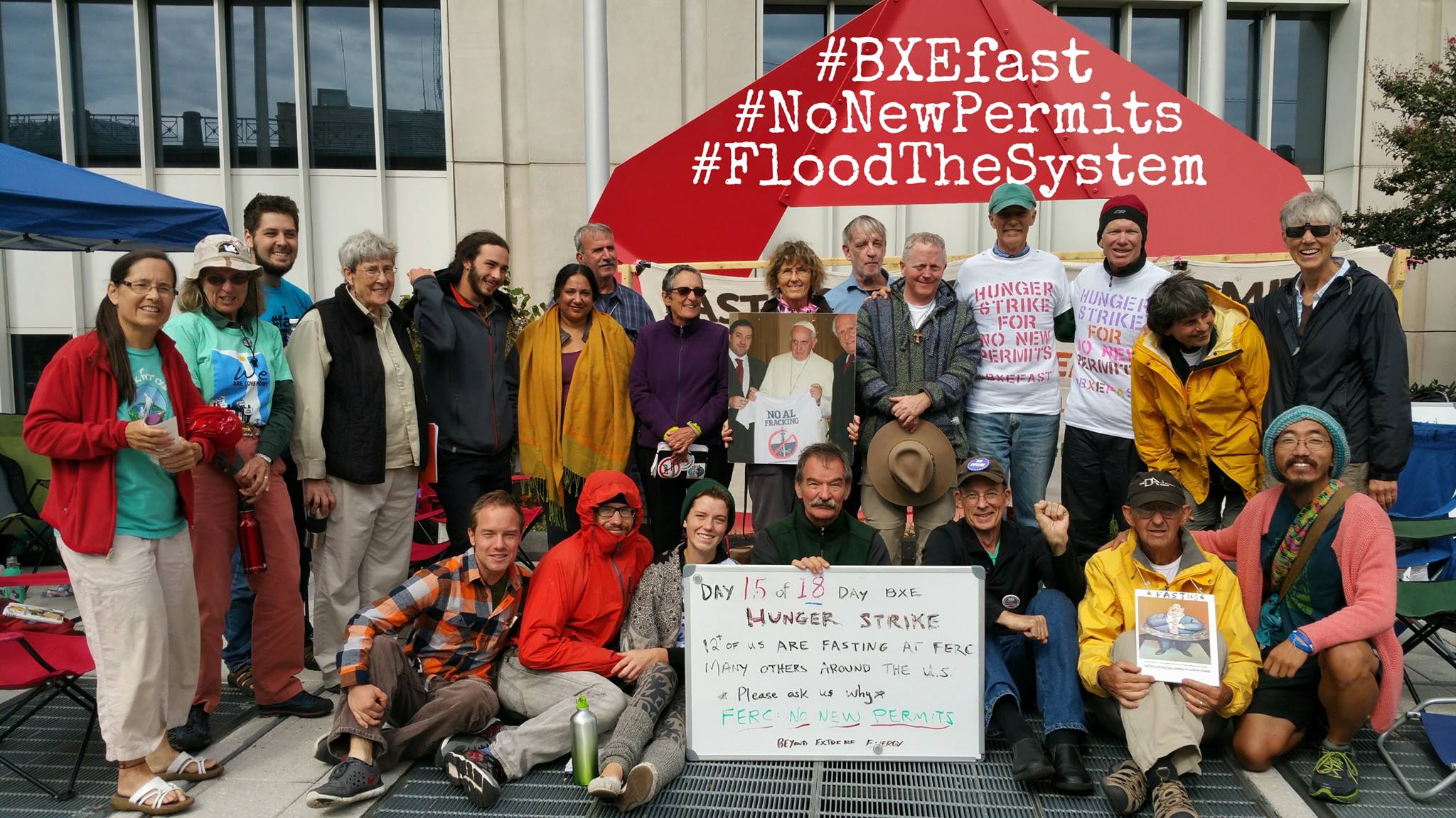
This past week, I took a trip from my school in Western Massachusetts to Washington DC, to hear the Pope’s message, to participate in Jewish Yom Kippur services in solidarity with the Pope’s call for climate action, and to support the Beyond Extreme Energy group as they neared the end of an 18-day water fast. They were fasting on behalf of communities across America that are being impacted by the fracking industry. At the confluence of the Papal visit to the capital and many interfaith climate justice actions leading up the event, the fasters were giving everything they had to the last couple days of prayer, in order to take a bold stand against the fracking industry.

Spending time with the fasters in the church where we were sleeping, at the climate justice rally in the National Mall and throughout various actions allowed me to ask questions and to understand the motivations behind the fast. Being with people who are fasting is odd, because you can tell that they are struggling but it’s not very visible on the outside. Through words, they shared the difficulties they were facing, the objectives of their actions, and the impact they hoped to make.

Steve Norris, one of the BXE fasters, noted how this method of protest was passed down from struggles in the past. “Gandhi said that fasting is the purest form of prayer,” he said, “This is a prayer we put out to the Universe.”

It is also a strategy, used to raise awareness and heighten the stakes. BXE is hoping to bring fasting back into the active toolbox for creating change in our modern world.

Why did these folks feel strongly enough to resist food for 18 days?
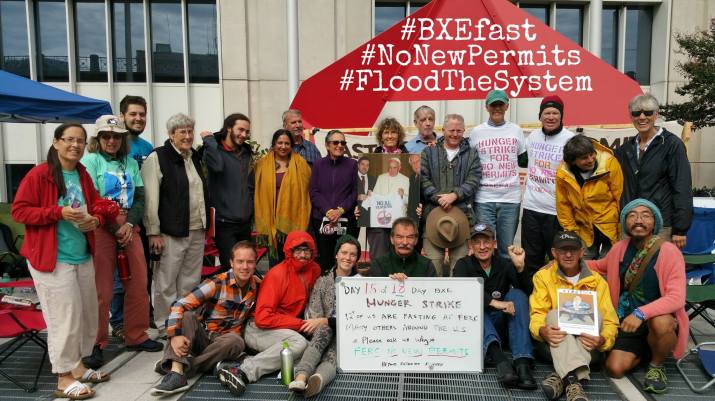
Hundreds of fasters will be breaking their hunger strike on September 25th at NOON

The Frack Attack

The past decade of increased domestic oil and natural gas extraction has resulted in a major build-out of related infrastructure, all across the United States. The flow of fracked gas to the shore for foreign export is never fast enough to satisfy the corporations at play. More and more transmission, compression and storage facilities must be built to support the corporate pursuit of profit and control over the market. We are in the midst of a global pipeline epidemic, none of these projects being limited by borders as they are connected to the trans-national energy market.

With little to no regulatory restrictions to adhere to, large energy infrastructure corporations, often based in faraway places are quickly establishing new pipeline routes and related infrastructure in a web stretching across all parts of the country. Each step of the process, from fracking to exportation of liquefied fracked gas provides an opportunity of profit for the extreme energy industry while exploiting and endangering communities. Even in the face of declining stock returns and even the threat of bankruptcy for some fracking companies, the industry continues to seek expansion, putting communities and the Earth in jeopardy. Helping to decline the financial stability of this industry is the renewable energy sector, which is enjoying unprecedented growth, creating new jobs and helping to transform the country’s energy profile.
—————————————–
We Are Cove Point is a coalition working to stop a massive fracked-gas export terminal from being built by Dominion, centrally located in the town of Lusby, Maryland. The facility would be the first on the East Coast, its impacts would be felt by many.  Learn more: www.wearecovepoint.org
—————————————–
IMG_5477Community Resistance and Movement Building

Communities across the United States are being faced with these large scale industrial projects which bring harm to their ways of life and the land they hold dear. They are being forced to organize themselves in opposition to projects, coming together in homes and churches to plan strategies. These communities are using scientific research to determine and make public that these projects do pose a serious threat to their lives and to the entire region. This research also clearly addresses the ways in which these projects would increase global CO2 emissions, contributing to widespread climate chaos.

Many of these communities are engaged in ongoing resistance campaigns, using a variety of tactics to protect themselves from the onslaught of the fracking industry. The individuals that make up the resistance campaigns have dedicated their lives to defending their communities.

These resistance communities often use a variety of tactics, carried out by volunteers, often whom have a deep connection to the land in jeopardy. While working painstakingly through the different legal avenues, many of these groups have also engaged in nonviolent direct action campaigns, feeling they have no other option to fight off the industry. These pockets of human resistance are forming multi-faceted social movements, each specific to its place and population. Looking at the vast number of communities engaged in this struggle, from those along the TGP pipeline route in Western Massachusetts, to those facing massive compression and treatment facilities in Philadelphia, to those facing the effects of local power plants switching to fracked gas, we ask what could allow a single industry to cause so many cases of human resistance in such a short time period. Who regulates this industry and why are they not doing their job?

—————————————–
FANG (Fighting Against Natural Gas) has been organizing resistance to Spectra’s Algonquin pipeline, part of the AIM project. After many levels of escalation and movement growth, FANG delivered an official pledge of resistance to Spectra. Construction is set to begin… Learn more: http://www.fangtogether.org/

—————————————–
IMG_5535FERC Doesn’t Work

The Federal Energy Regulatory Commission is the government body responsible for overseeing the construction of interstate natural gas projects. FERC should be a federal agency supported by democratic process which represents the common good. To the contrary, it is lead by federally appointed officials who are not required to report to any superior government structure. It is tasked with researching and reporting risks associated with natural gas related projects, and using that research, along with public comments, to determine whether or not approval should be granted.

Unfortunately, the payment FERC receives from the very industry it is meant to regulate serves as a deep bias on the side of the corporations. FERC hasn’t denied approval of any natural gas project, at least in recent years. FERC consistently ignores hard, scientific evidence and thousands of public comments as well as direct actions at their doorstep, consistently for over a year, in order to give the fracking industry permission to expand, at the expense of many.

—————————————–
We Are Seneca Lake is using ongoing human blockades to prevent trucks from entering a facility where Crestwood is planning to store vast amounts of fracked gas in unstable, underground salt caverns. Crestwood’s plan to industrialize the Finger Lakes puts the whole community in jeopardy.
Learn more: wearesenecalake.com
—————————————–
IMG_1755
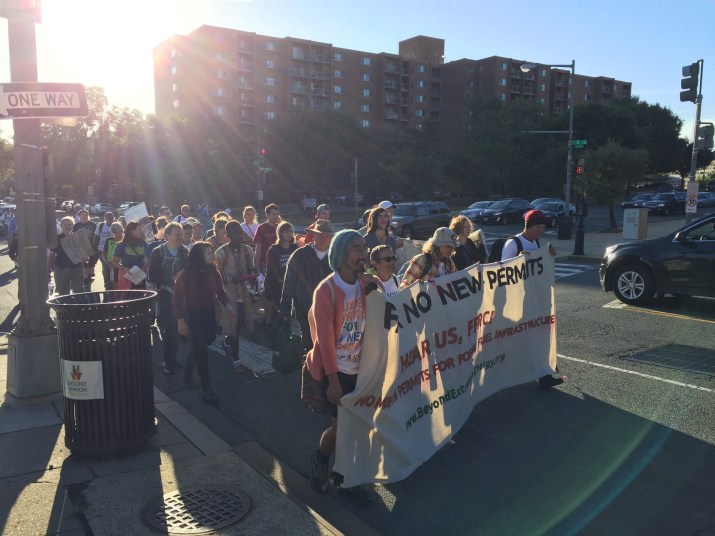
#BXEFast for #NoNewPermits

“Everything that we’ve been doing for the past year in front of FERC has been to call for no new permits, to say that if we continue building out fossil fuel infrastructure, which is what this agency keeps approving, our world is going to be unlivable.” says Melinda Tuhus, a BXE organizer and member of the fast.

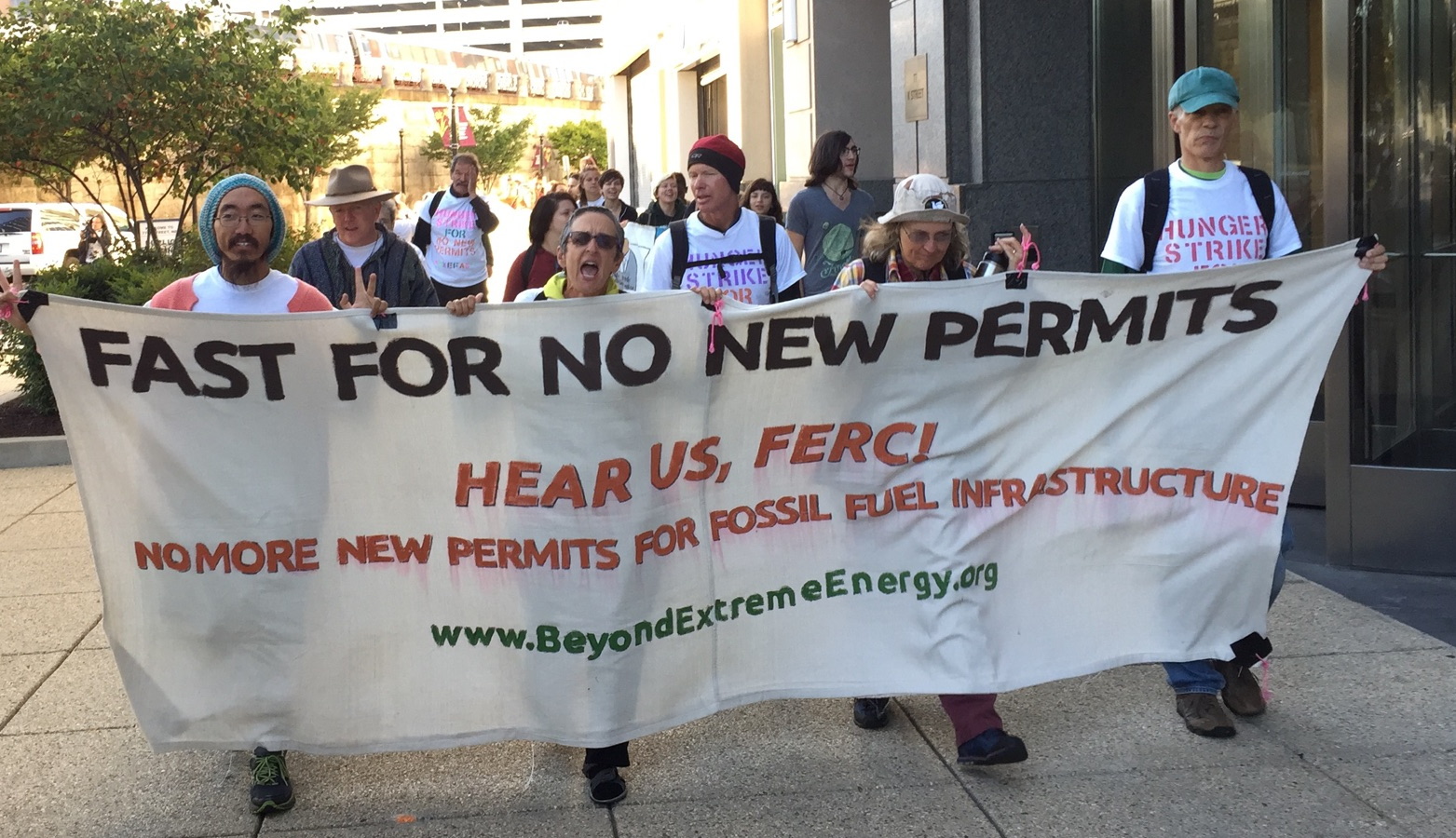
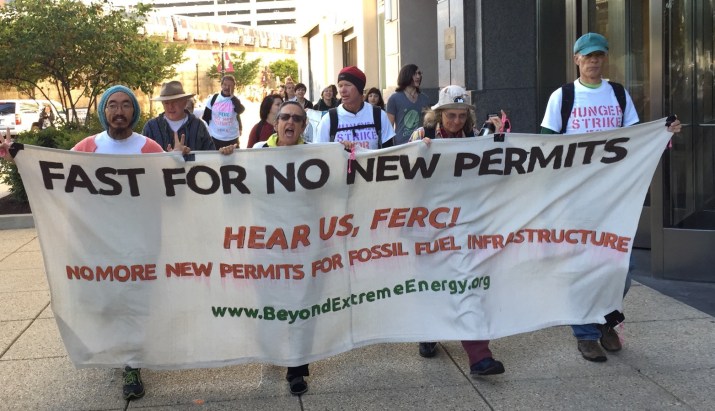
The Fast for No New Permits was organized by Beyond Extreme Energy, a group whose target is FERC for its role as a key player in support of the fracking industry. The fast was created to bring attention to FERC and to bring prayers together from numerous communities across America who remain at war with the fracking industry.

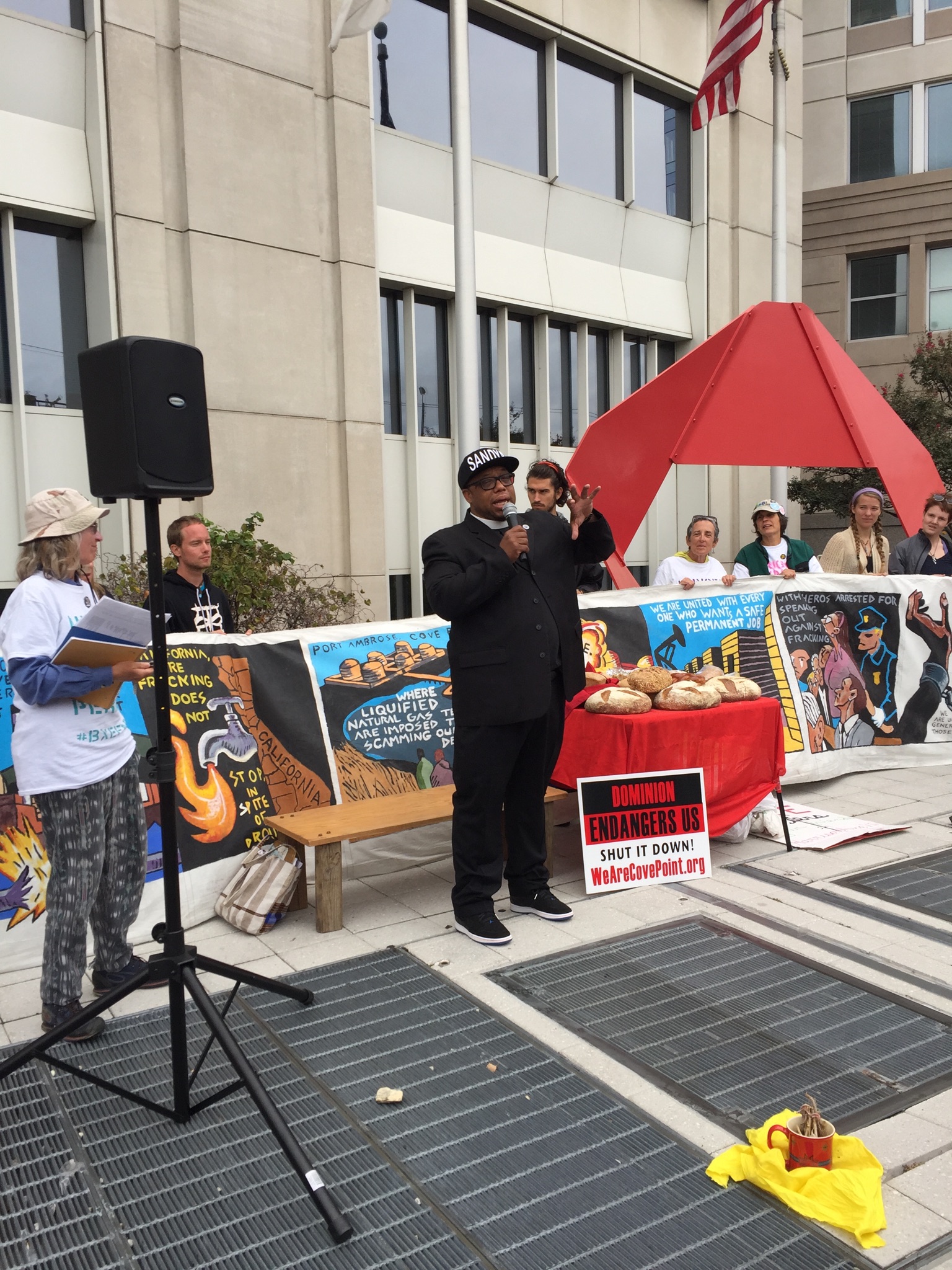
The members of Beyond Extreme Energy helped bring these prayers together in the form of a quilt with squares from different resistance communities, a 50 ft. hand painted banner called “The United States of Fracking Banner”, and the hunger in the bellies of those fasting. Stories were brought from the resistance communities, of permitting processes, public hearings, pipeline surveyors, stances of elected officials and the actions taking place to protect themselves from this persistent and destructive industry.

Lisa DeSantis, from the “frack fields” of Western Pennsylvania, joined the fasters to stand up for her community, a place transformed in recent years from a lovely countryside to an industrial maze of drill rigs, compressor stations and pipeline clearings. She was joined by representatives from many communities across the country.

“We are dealing with water pollution,” she says, “the first site that was drilled in my county in 2012 contaminated four known water wells. The sanitation department is taking the residual waste from the fracking industry and dumping it into our water, causing environmental damage all the way downstream in the Ohio river.”

—————————————–
Millennium Pipeline installed a 12,260 horsepower compressor station in Minisink, NY, regardless of overwhelming evidence of negative impacts on the community. The resistance community continues to explore new ways to protest Millennium. More: http://www.stopmcs.org/
—————————————–

18137358659_97167e1dae_kPeople vs. Power

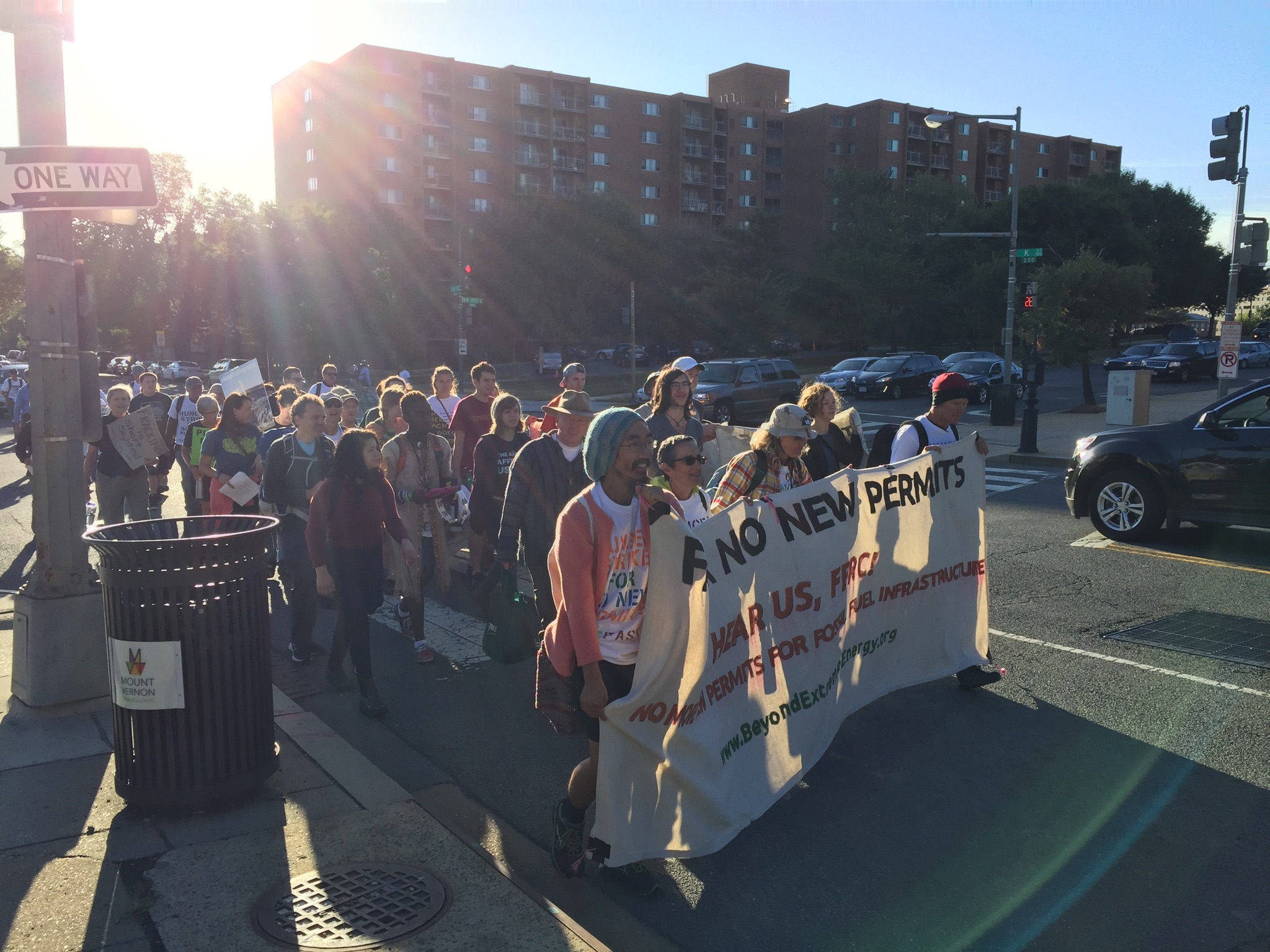
Beyond Extreme Energy feels it has done everything it can through the legal and accepted means of delivering their opinions to FERC. Receiving no recognition or reply, these demands have evolved into action. The objective now is to raise awareness of the heinous set of practices and convoluted processes that make up FERCs work. This fast comes after disruptions of public hearings, a full week of direct action at FERC, and numerous other tactics over the past year, publicly pointing directly at FERC and demanding accountability and an end to permits for hazardous projects.

On behalf of those communities being negatively impacted by the fracking industry, these fasters remained strong and hopeful, even in the face of a powerful and rogue government agency.

“I think it’s a great tool” one of the fasters, who chose not be identified, explained, “it’s worked in the prisons of Northern Ireland, and it’s working in the prisons of Palestine, and it’s going to work here.”

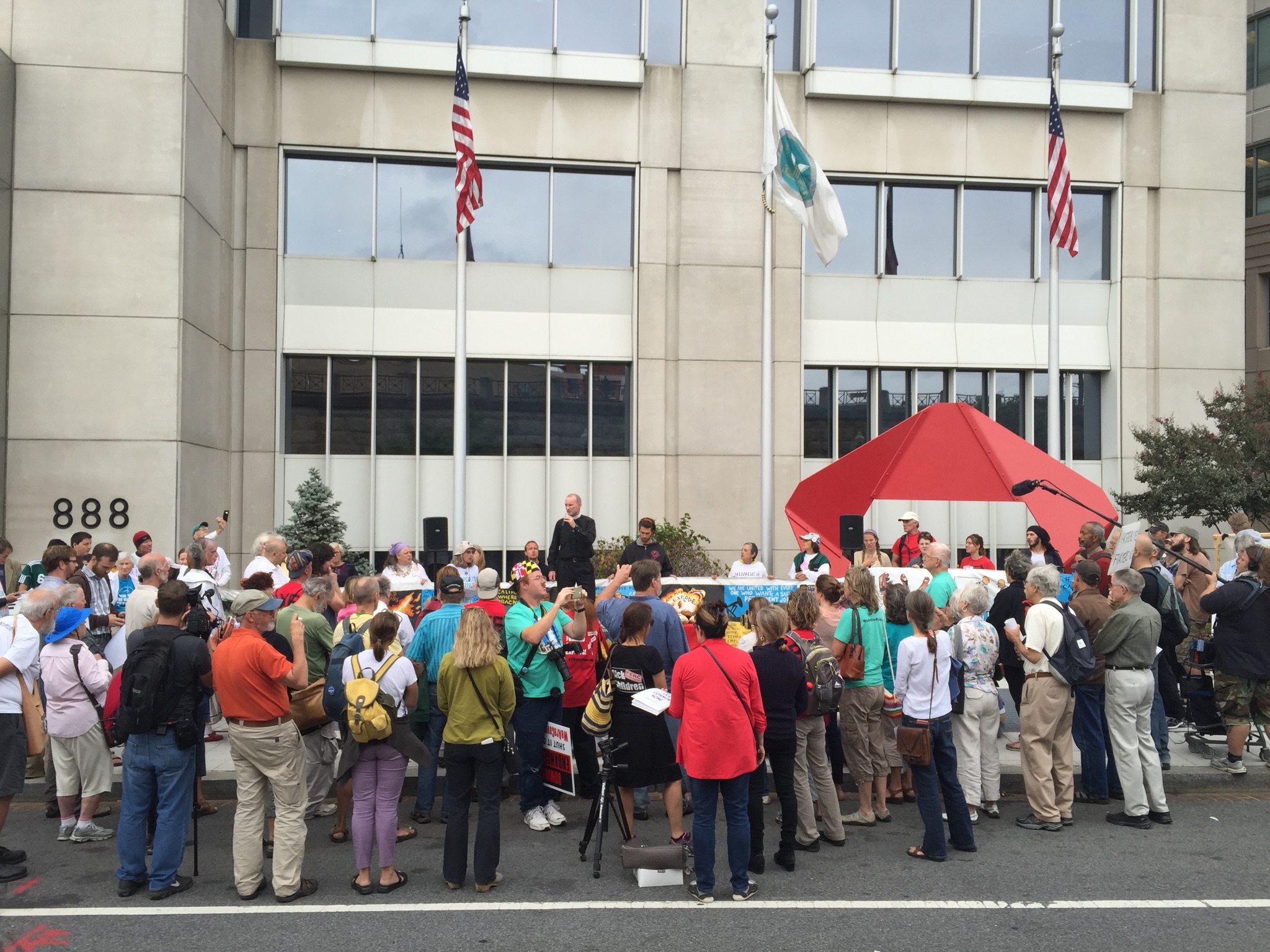
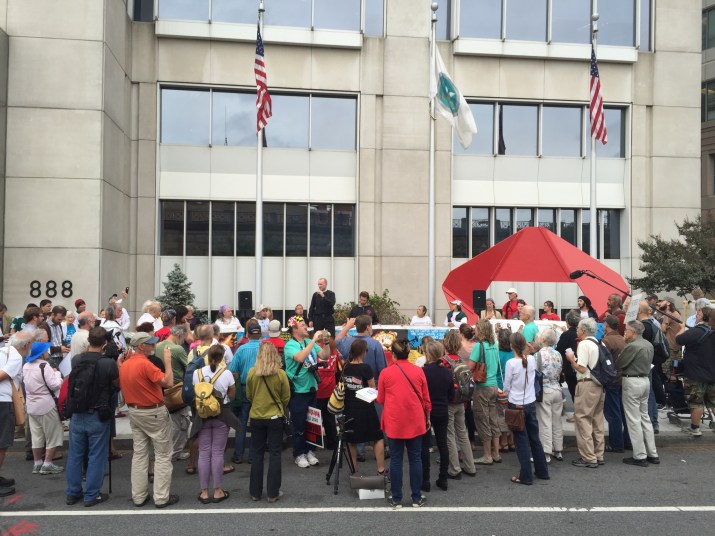
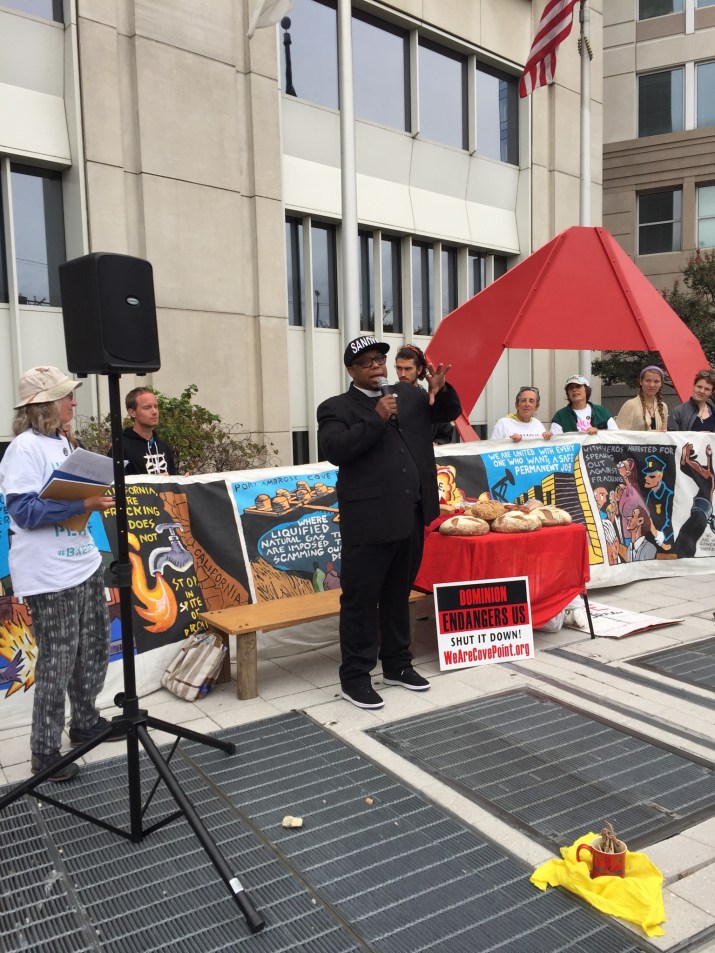
At the end of the 18-day water fast, BXE, their supporters and individuals from communities impacted by fracking infrastructure held a rally outside the FERC headquarters in DC. Along with breaking bread to fill empty stomachs and impassioned speeches making the message clear, BXE delivered the Pope’s monumental encyclical, Laudato Si to the five FERC Commissioners.

At a time of climate chaos and a new era of human action to address it, the fracking industry remains in a state of growth, destroying the livelihoods of countless communities in its path. FERC is a part of the reason for this destruction. BXE and their supporters hope to put us on a different path, one that includes 100% renewable energy, decolonization, and re-localization of our economies.

“This fast, these prayers, are a stone we throw into the water, and there is no way to know how far the ripples will reach, or where they will go.” said Steve Norris, remarking on the impact of their actions. Their prayer was sent widely and the impacts are yet to be seen. For what it’s worth, these fasters successfully raised a major alarm at the headquarters of an agency whose time has most certainly come. It was a blessing to spend time with them and an inspiration to see the principled actions they continue to take for the creation of a better world.

To learn more about and to engage with Beyond Extreme Energy, visit: https://beyondextremeenergy.org/

-Gabriel Shapiro, second-year student at Hampshire College.
Connect with me on Facebook, Instagram ‘minimarv’, or e-mail gabeshapiro42@gmail.com