Beyond Extreme Energy (BXE)

12 People Fasting for 18 Days Demanding FERC Issue #NoNewPermits

by Ted Glick and reposted from ecowatch.com

Twelve members of Beyond Extreme Energy (BXE), ages 19 to 72—from California, Virginia, DC, New York, New Jersey, Connecticut, Nebraska, Michigan and North Carolina—are in the beginning days of a planned 18-day, water-only “Fast for No New Permits” for fossil fuel infrastructure in front of the Federal Energy Regulatory Commission (FERC), a virtual rubber-stamp agency for the fracked gas industry.

Each weekday until Sept. 25 we will be on the sidewalk in front of FERC from 7 a.m. to 6 p.m., leafleting FERC employees—over a thousand of them—as they arrive for or leave from work. We’re also passing out leaflets to thousands of others who work or live in the area who walk by.

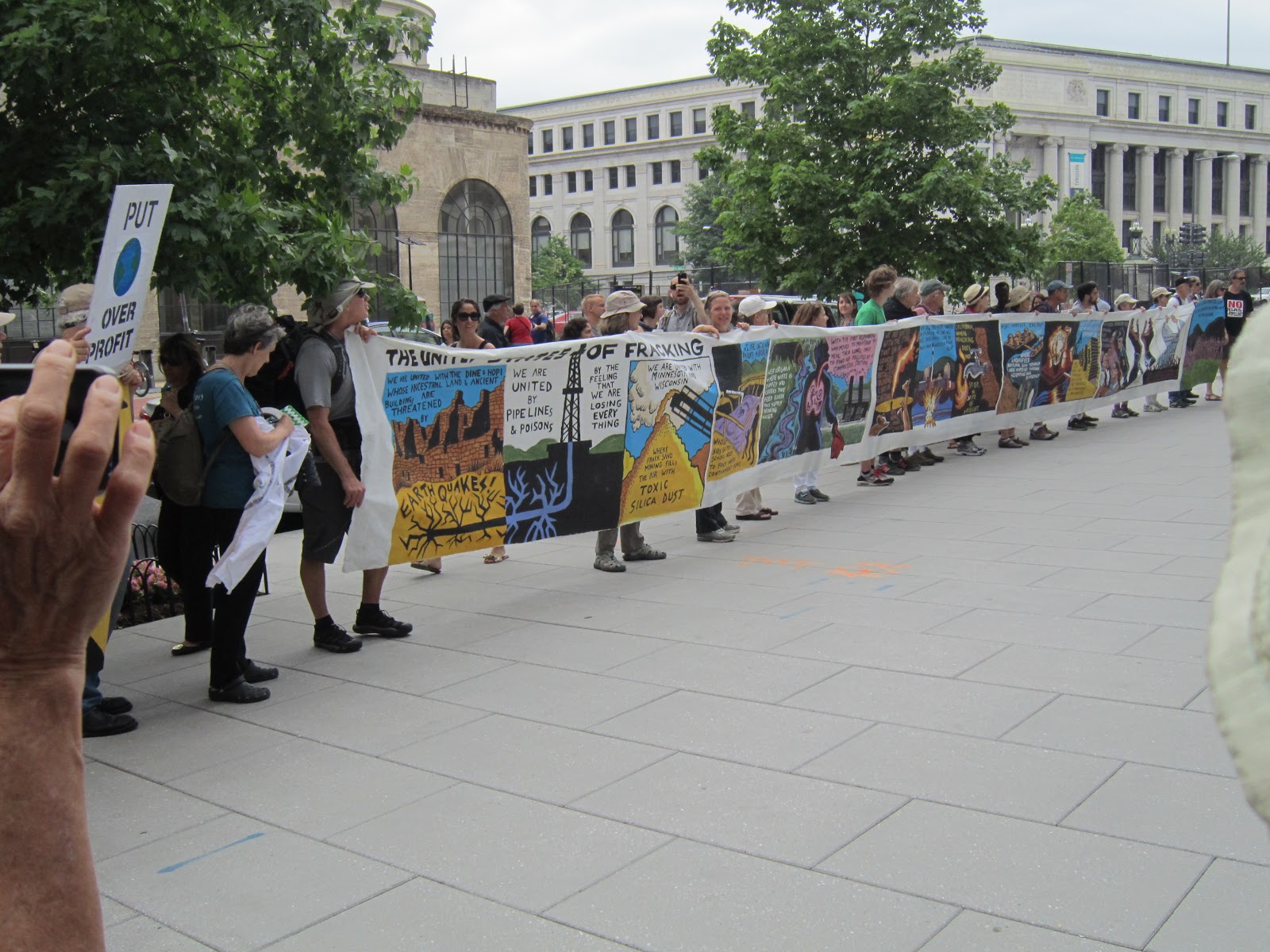
Day three of the No New Permits BXE fast opposing fossil fuel infrastructure. Photo Credit: Beyond Extreme Energy

It’s not a very aesthetic area, mostly high-rise office buildings and condominiums. There are some colorful begonias around the FERC building and about 15 young trees growing across the street just three blocks north of Union Station. Also across the street is a 30-foot high stone wall on top of which the red line trains of the DC Metro subway system come by loudly every 10 minutes or so, interrupting any and all street conversations.

For the 12 of us, joined by supporters and people fasting for shorter periods of time, this will be our “home” until Sep. 25, the day after Pope Francis speaks to a joint session of Congress. For some who have slept and will be sleeping here overnight, it’s a 24-hour “home.”

The first two days have actually been pretty brutal because of the high humidity and temperatures in the low- to mid-90’s. The heat index where we are could well have been more than 100 degrees because of all the concrete around us.

Every morning and late afternoon we check in with each other to see how we are doing and to finalize plans for the day. This morning one of the older fasters reported that he had almost fainted when he stood up too quickly; as I’ve learned from past fasts, it’s essential during an action like this to move deliberately and consciously, very aware of how your body is dealing with the lack of food.

Why are we putting ourselves through this?

One reason is the upcoming Sept. 22 – Sept. 27 visit of Pope Francis to the mid-Atlantic region of the U.S. BXE is very supportive of his repeated calls for action on climate, environmental and social justice. Some of us have been reading the Pope’s historic encyclical, “Laudato Si’, On Care for Our Common Home,” on the FERC sidewalk. We see our fast and a series of other activities in DC leading up to and after the Pope’s speech before Congress on Sept. 24 as part of the process of forging a stronger and deeper climate justice movement, one capable of meeting the urgent challenges of this do-or-die decade.

We are fasting because the movement which we are representing has tried every other means available to get FERC to stop being a rubber-stamp agency for fracked gas infrastructure (pipelines, compressor stations, storage and export terminals). Fasts and hunger strikes are usually undertaken when the oppressors have refused to be moved and more serious tactics must be utilized.

We are calling upon FERC to put renewables first. It must break its alliance with the fossil fuel industry and issue “No New Permits” for fossil fuel infrastructure until it has prioritized wind, solar and renewable energy.

What do we hope to accomplish? We hope our message will reach FERC employees, as well as the general public and Pope Francis. We are openly calling for whistleblowers. We want to strengthen the movement fighting FERC’s corrupt ways and the overall movement for climate justice and positive social change.

BXE during this fast is also working to make connections between issues. Struggles for justice are related. For example, we support the Black Lives Matter movement and on one of the days of our fast we will be doing public education in front of FERC about the importance of their efforts.

How can you be supportive of this Fast for No New Permits?

1. Join us at our fast in Washington, DC or where you live, for anywhere from one day to a couple of weeks. More information, including on how to sign up can be found here.

2. Come to DC for the actions happening Sept. 22 – Sept. 25. The big one is the morning of Sept. 24 on the national mall, between 3rd and 7th Street and near the U.S. Capitol. There will be speakers and music before and after the Pope’s 9:30 a.m. address to Congress; the Pope’s speech will be broadcast to everyone on the mall and his office has announced that he will come out to address the crowd after he speaks inside.

On Sept. 25 at Noon in front of FERC, we will end our fast. Plans are still developing, but we intend to make an effort to deliver five copies of the Pope’s encyclical to the five FERC commissioners. We will walk in a serious procession around the FERC building. We will hear from fasters about what this 18 days without food has meant to them.

3. Participate in the “No New Permits Solidarity Fasting Quilt” project. We are putting together a quilt with stories of local struggles against FERC or for justice, as well as drawings and words from people who are fasting about why they are doing so. Squares will be 12 inches on each side, with an additional inch on each side for when they are all put together to make a beautiful mosaic of our movement. Any color fabric can be used. They should be sent no later than Sept. 16 to CCAN, 6930 Carroll Ave., Suite 720, Takoma Park, Maryland. 20912, Att: Quilt project.

4. And finally, you can call FERC at 1-888-715-9918 to demand that they stop being a rubber stamp for the fossil fuel industry, prioritize renewables and issue no new permits for fossil fuel infrastructure until these changes are made.

Let’s rise up now in defense of and in care of our common home!

Ted Glick is the National Campaign Coordinator of the Chesapeake Climate Action Network. Past writings and other information can be found at http://tedglick.com and he can be followed on twitter at http://twitter.com/jtglick.

Personal update from Steve Norris: Fasting At FERC

Steve photo 1_20_15Fasting this week at the Federal Energy Regulatory Commission has reminded me repeatedly of the some words from one of my favorite poems by Wislawa Symborska (Polish poet who won Nobel Prize).

It’s called ” A Few Words on Soul”:

“Joy and sorrow
aren’t two different feelings for it (soul).
It attends us
only when the two are joined.

We can count on it
when we’re sure of nothing
and curious about everything.”

Today, Saturday,  we are in the fifth day of our 18 day water-only fast. At present the whole thing is a mystery.  It’s one big leap of faith into a void that many have warned me not to enter – faith that doing this, depriving myself of food for a time, will teach me and others important lessons I need to know, and perhaps get the attention of FERC and other powers that be in a way our year-long protests, arrests, disruptive actions inside FERC, letters, and meetings have not done.

Also, the experience so far is one or both joy and sorrow: There is the great exuberation and learning that comes from working and fasting daily alongside people with rock-solid determination to challenge climate change and its attendant economic, social and racial injustices. And the exhileration each time I see a stranger’s eyes light up and they say something like :”thank you for being so bold. Please keep it up.” Then too there is the sadness of  dealing daily with the reality that millions of people (the victims of Hurricane Katrina, and emigrants from Syria, for example) are already dealing with the impacts of climate change, and that nothing in the short term is going to stop their uprooting and pain, and that ultimately my own granchildren and great grandchildren may be similarly impacted.

Because I’m sure of nothing, and unable yet to discern the meaning of this, I can only share vignettes of my experiences while being part of this community of courageous fasters who are not eating any food, who live for 10-11 hours per day on the sidewalk in front of FERC, who try in a friendly manner to engage both FERC employees (there are 1500) and passersby (there are many) in conversation, which we do with signs, banners, handouts, friendly greetings and just being present.

So here’s some things that have moved me:
  • As I was unloading my truck at 7 am this morning, a woman I had never seen before walked up to me and said “thanks so much for your work here. It is so important. How long will you be here? And is there anything I can do to help.” Many passersby, after reading our banner and the white boards explaining our presence, have done similar things
  • A 71 year old FERC employee approached me, starting the conversation with :”They’ve told us not to talk with you, but I’m going to anyway.” We talked for about 30 minutes about energy policy, fossil fuels and alternative energy. He understands the science of climate change, but feels that alternative energy is not reliable enough, and therefore we have to risk overheating the planet to obtain reliability.
  • Unlike him, many FERC employees will not even give us eye contact even when we say “hello, how are you doing?” This morning we experimented a little with opening doors for them. We are hoping that our 3 week simple and friendly presence here will degrade some of their resistance to us. Who knows?
  • Yesterday I walked up to a guy I had seen before but not talked to. “How are you?” I asked. “I’m not supposed to talk with you,” he replied. “So do you work at FERC.” “Yeah” “What do you do?” “I work at FERC”. “So you can’t tell me where.” “No”. “So what do you think about our fast.” “I’m not supposed to talk to you.” “Why’s that?” “Dunno.”  My conversation with him continued like this for maybe 20 minutes. This could be great material for a comedy routine. Anyone want to put it together?
  • Flash mobs. We did two in support of a group of about 150 Grandparents from Elders Climate Action. At 8:30 Thursday morning in the mammoth Rotunda of Union Station 200 of us sang and danced to the Climate Change Anthem (“We’ve got to Wake Up, We’ve got to wise up, We’ve got to open our eyes and do it now, now now, etc.”). Then again at noon in the cafeteria of the Longworth House of Representatives Office Building as Congressmen and staff sat around eating. We dispersed after two minutes of this just as 10 capitol police descended on the lunchroom wondering what had happened and how we had so quickly melted into the crowds.
  • We have several visitors every day, friends and activists who live in the area, passersby who want to talk more, people who have heard about what we are doing and want to know more, a couple of musicians who sing for us. Their visits are warm and energizing. The outpouring of support is phenomenal. Several people have asked me what can they do for me, which is deeply moving. My first response is “bring me some food.” But I have to then add that I’m joking. My needs are pretty minimal right now, only a gallon of water and some electrolytes every day.
  • One of the greatest joys and challenges is getting to know the other fasters who are a diverse group of people.  a 19year old from California who’s just beginning to explore activism, a 26 year old woman from Connecticut who after this fast will go to Rome and then walk 900 miles to Paris for the next UN Climate Conference in December; a couple of 60 year old nomads who spend their lives walking the roads and mountains of the US; a couple of older “professional” activists who have been working for social justice forever; a 30 year old social media guru who has visited more front line communities fighting fossil fuels than anyone I know; and so on. Mostly we work well together, though like any small group that is this dependent on one another and has important decisions to make which affect everyone collectively and personally, we have to struggle to arrive at consensus sometimes, or at least near consensus.

There’s much more of course I could share, but I think this is enough for now. Please keep me in your thoughts and prayers, and when you find light shining on mystery, please let me know what that means. And when you can’t find the light, revel in the uncertainty, and teach me how to do the same.

Love, Steve

Fast at FERC for “No New Permits” Has Begun

Fast Day 1

Opponents of FERC’s role in permitting gas projects that worsen the climate crisis prepare for Pope’s visit to DC

By Melinda Tuhus

(September 8, 2015) WASHINGTON, D.C.—On Tuesday morning, a dozen people begin an 18-day water-only fast in front of the Federal Energy Regulatory Commission (FERC) to raise awareness of the agency’s contribution to worsening climate change and to harming the health and well-being of frontline communities where these projects are built.

The fasters, ranging in age from 19 to 72, are demanding that FERC issue “No New Permits” for industry projects such as interstate pipelines, compressor stations and LNG (liquefied natural gas) export terminals until the agency prioritizes solar, wind and other renewable sources of energy. These projects release methane pollution, a potent greenhouse gas that is worsening the impacts of climate change.

Fasters, organized by Beyond Extreme Energy, will hold vigil in front of FERC, 888 First St. NE, Washington, D.C., weekdays from 7 a.m. to 6 p.m. They will be joined by others fasting for shorter periods at FERC or in their own communities.

They will end their fast on Friday, September 25, the day after Pope Francis speaks to Congress, where he is expected to address the issue of climate change and its disparate impact on the world’s poor.

Excerpts from fasters’ statements (https://beyondextremeenergy.org/testimony-of-the-fasters/):

Francis Eatherington of Roseburg, OR: “I will be fasting to help FERC understand the devastation caused by permitting projects like the Jordan Cove LNG Export Terminal and pipeline in my home state of Oregon. In September FERC will be releasing their final environmental study which will likely claim there is no harm from exporting fracked natural gas from Oregon to Asia. FERC will allow Veresen, a foreign corporation, to take land from over 300 Oregonians, including my land, with eminent domain to build a 230-mile pipeline across our state’s pristine forests and farmland, ending at Coos Bay on the Pacific coast.”

Ted Glick of Bloomfield, NJ: “Fasts and hunger strikes are usually undertaken when things are serious, when those with the power to right a wrong have consistently refused to do so despite repeated protests. That is our situation with FERC, an agency that has a revolving-door relationship with the gas and fossil fuel industry. It has proven itself over the last year to be a corrupt and complicit agency. I will be fasting to appeal to FERC employees, to members of Congress, to court judges and to the American people to take action to stop FERC’s rubber stamping of fracked gas infrastructure proposals.”

Jane Johnson of Amherst, MA: “I will be fasting on September 24th, which would have been my brother’s 70th birthday. He died April 1st on his bicycle in Canberra, Australia, before he had finished his novel about Climate Change, The Green Bag. Here in Amherst, MA, I’m working with Quakers, other faith groups, and Raging Grannies to fight the proposed Kinder Morgan pipeline.”

Lee Stewart, Washington, DC: “This fast isn’t about death or suffering. Instead, it’s about commitment. Unwavering commitment to the truth that ALL fossil fuel permits at FERC must stop now! Unwavering commitment to the extraordinary individuals all around the country who are standing up to defend the people and places they love from what FERC does. Unwavering commitment to each other in a world torn asunder by the divisive god of economic growth. Unwavering commitment to interconnectedness, the realities of collective liberation, and the truth that we win it all together, or we win nothing at all.”

============

Beyond Extreme Energy is an activist network of organizations and individuals that came together in 2014 to raise public awareness of the disastrous impacts of fracking, fracking infrastructure, proposed gas exports and other extreme energy extraction practices; to take direct action to stop them; and to promote an energy present and future of renewables and efficiency.

News From Fossil Free Rhode Island: The Fast For People, Peace, and Planet

IMG_2624.JPG

FOR IMMEDIATE RELEASE

From: Fossil Free Rhode Island

Fast For People, Peace, and Planet

Kingston, RI—September 8, 2015

Climate chaos is here and on the rise.  And the most vulnerable among us, who have contributed least to the problem–Indigenous people, people of color, the poor and the Global South–are suffering the worst impacts.

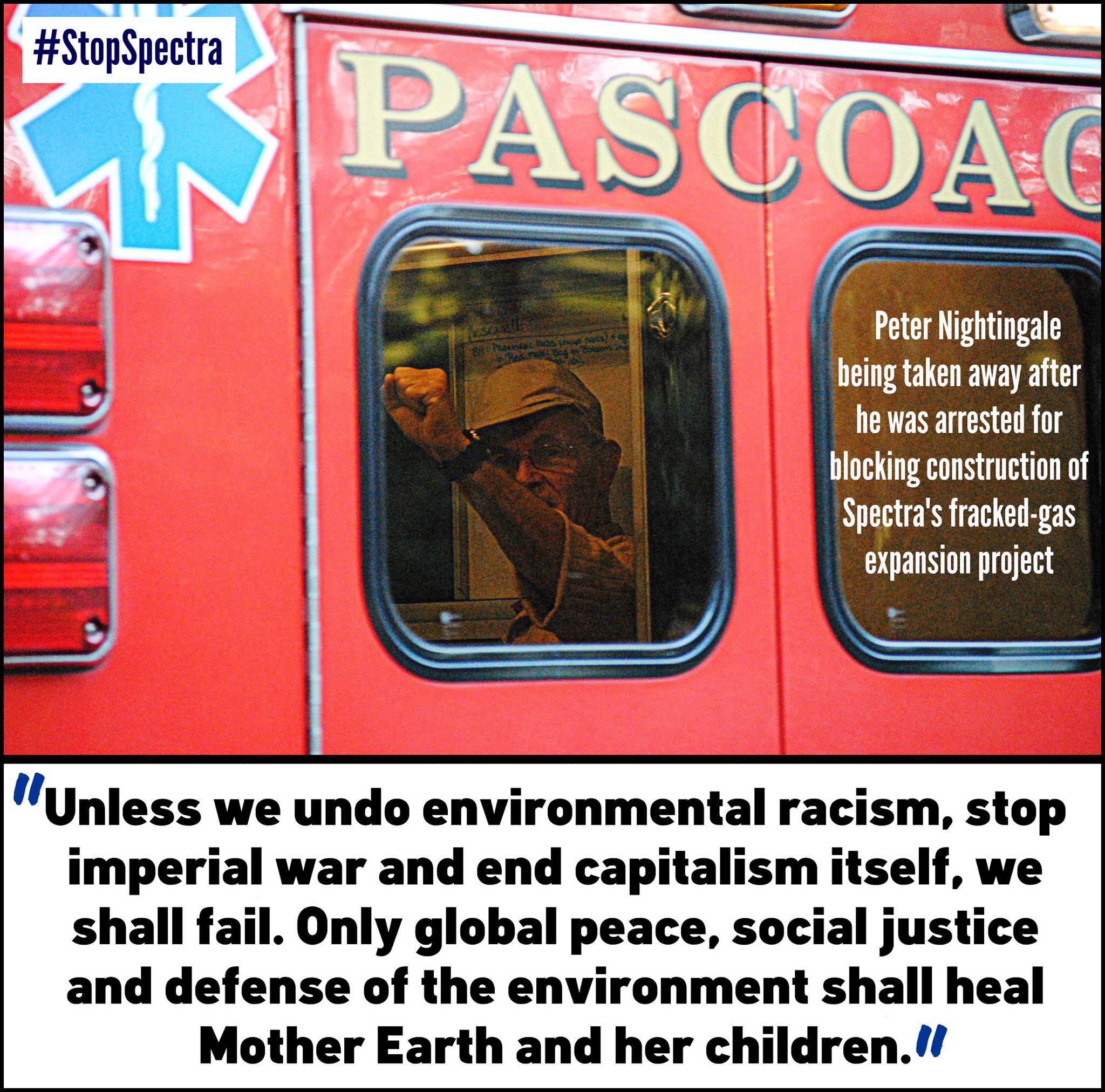
Beyond Extreme Energy (BXE), a grassroots advocacy group that’s fighting fossil fuel expansion, is organizing a fast to call on the Federal Energy Regulatory Commission (FERC)–the federal agency that’s charged with issuing permits for interstate pipelines, liquefied natural gas terminals, etc.–to stop approving new fossil fuel projects and promote renewable energy and conservation instead.  Members of the group will be fasting outside FERC’s headquarters in Washington, DC, from Sept. 8th till Sept. 25th.  “FERC operates according to statutes that have been put in place by fossil fuel industry insiders; it has a pattern of rubber-stamping fracking-related infrastructure and other fossil fuel projects, in violation of the National Environmental Policy Act as well as ancient, venerated legal principles,” said Peter Nightingale, a physics professor at the University of Rhode Island and a founding member of the divestment advocacy group Fossil Free Rhode Island.

Members of Beyond Extreme Energy will be fasting on water only from September 8th until the 25th, the day of Pope Francis’ address to the UN General Assembly and the day after his address to Congress.  BXE is inviting others to join them by fasting for one or more days during this interval, around-the-clock or sunrise-to-sunset, at whatever level is meaningful to them–water-only, juice-only, etc.  A number of groups across the nation have endorsed the fast—see this link.  Fossil Free Rhode Island will be organizing and participating in a series of local events in support of the No-New-Permits fast.

“I am fasting to call attention to the hundreds of thousands of people around the world who are already dying every year—often from hunger and disease—as a result of climate change, as well as the growing number of Americans whose health, communities, or livelihoods have been destroyed by fracking, mountaintop removal mining, coal-fired power plants, etc.,” said Lisa Petrie, who is hoping to fast from sunrise to sunset for three days.  To learn why others are fasting, read their testimony here.

On September 12, 2015, at 9am, The Raging Grannies of Greater Westerly will be hosting a vigil on the traffic island across from the downtown Westerly Post Office on High Street; Fossil Free Rhode Island is a co-sponsor.  We’ll also be participating in the Peace Fest on Saturday, September 19 in Providence; see this Facebook Event for the details.

The focal event for the fast in Rhode Island will be a family-friendly demonstration at the State House in Providence on September 22 at 3 pm to call on our government to implement policies in line with its duty to present and future generations.  Non-fasters are welcome to join us.  People are especially encouraged to bring their children as a concrete reminder of what we are trying to protect.

Fossil Free Rhode island will also be participating in the URI International Day of Peace on the Quad on September 24 at 10AM.

The  Fast For People, Peace, and Planet is a call for universal peace, social and racial justice, and ambitious action to stop climate change.  Guiding principles are:

  • Natural Law: If humanity continues to ignore the laws of nature, life on earth will suffer the consequences—Mother Nature does not negotiate.

  • Intergenerational Justice: the present generation must preserve the gifts of Mother Earth for future generations.

  • Public Trust Doctrine: It shall be the duty of government to “provide for the conservation of the air, land, water, plant, animal, mineral and other natural resources of the state.” [*]

 Anyone interested in joining the fast is encouraged to register here.


[*] Constitution of the State of Rhode Island & Providence Plantations, ART. 1, Section 17.

###

More Than 80 Health Professionals Demand Federal Energy Regulatory Commission Stop Unethical Experiment

BLOCKADIA - THE BEYOND EXTREME ENERGY ACTION in Washngton DC

Washington, DC – In an open letter to the Federal Energy Regulatory Commission (FERC), more than eighty health professionals urge the FERC to stop permitting oil and gas infrastructure and to move to clean sustainable sources of energy to protect the health of people and the planet. The construction of oil and gas projects such as unconventional fracking, pipelines, compressor stations and export terminals which pollute with cancer and disease-causing chemicals is akin to an uncontrolled health experiment that is destroying communities and risking lives of residents. These projects also harm the workers who build and maintain them. For the health of all who are involved, health professionals demand that this unethical ‘experiment’ stop.

Most people are unaware of the existence of the FERC, which according to its website is “an independent agency that regulates the interstate transmission of electricity, natural gas, and oil. FERC also reviews proposals to build liquefied natural gas (LNG) terminals and interstate natural gas pipelines as well as licensing hydropower projects.” The FERC is independent of taxpayer dollars, but is dependant on the oil and gas industries for its funding, the very industries the FERC is supposed to regulate.

As a result of this fundamental conflict of interest, the FERC is a rubber stamp agency for new permits regardless of the danger they pose to the health and safety of communities and the future livability of the planet. A case in point is the new Liquefied Natural Gas (“natural” is an industry marketing term, the gas is more accurately called “fracked gas”) refinery and export plant being built in Southern Maryland by Dominion Resources. This huge plant will store 14.6 billion cubic feet of liquefied gas for export by tankers to Japan and India.

Dominion is building its plant in the community of Lusby, Maryland. When Dominion submitted its application to the FERC, it left out 90% of the surrounding population. There are more than 2,400 homes, 19 day care centers and 2 elementary schools within the 2.2 mile evacuation zone around the plant. This is the first time that a plant has been built in such a densely-populated area anywhere in the world. When the permit was appealed to inform FERC of the risks to the more than 8,000 people living close to the plant, some living directly across the street, the FERC refused to review the permit. Visit www.WeAreCovePoint.org to learn more.

A coalition of people and groups called Beyond Extreme Energy has been focused on the FERC for the past year to call attention to its reckless behavior but the FERC has only responded with disregard for the people’s concerns and by taking extra steps to exclude the people’s voices. For example, people from communities that are being destroyed by FERC-approved projects must sit in an overflow room during the FERC’s monthly public meeting to prevent them from speaking out at the meeting.

Members of Beyond Extreme Energy have tried to work within FERC’s tightly-controlled system without success. They used protest to call attention to the direct impact FERC-approved projects are having on their livelihoods and communities, but the FERC continues to close its eyes and ears to them. Now BXE members are taking a bigger step and will be fasting on FERC’s doorstep for three weeks beginning September 8 to demand no new permits.

Starting with this letter from health professionals, there will be a series of letters laying out the case for an end to oil and gas infrastructure and a rapid transition to clean sustainable sources. These will be posted on the Beyond Extreme Energy website. Join the action to stop the FERC from locking us into a dirty energy future and instead make the FERC responsible to the people and for the transition to the carbon-free and nuclear-free future that is so desperately needed.

OPEN LETTER: Health Professionals Call for Moratorium on Fossil Fuel Infrastructure to Protect Public Health

We, the undersigned health professionals, strongly urge the Federal Energy Regulatory Commission (FERC) to immediately stop issuing permits for any new fossil fuel infrastructure. Based on scientific evidence of the health and public safety risks associated with fossil fuel infrastructure such as oil and gas drilling, refineries, pipelines and compressor stations and of their contribution to the further escalation of climate change and its associated risks to public health and safety, there must be a moratorium on new permits and a hold on construction for projects that have not been completed until a plan is made to move completely to energy sources that do not cause harm. The evidence is clear that the US can transition to 100% wind, water and solar energy by 2050 [1] and, in fact, that the US can be carbon-free and nuclear-free by 2050 or sooner [2].

Although the FERC is not directly involved in permits for oil and gas drilling, the pipelines and associated infrastructure under FERC’s jurisdiction do create the conditions that make more drilling and extraction of fossil fuels possible. It is becoming overwhelmingly clear that the process of extraction, refining, transport and burning of fossil fuels for energy is harmful to people and the planet at all stages. FERC must understand its role in the bigger picture of a national energy policy which is hurting communities and worsening the climate crisis.

As fossil fuel reserves decline, more extreme measures are being taken to extract them. In recent decades there has been a boom in unconventional fracking for oil and gas. Fracking pads and associated infrastructure are being placed close to homes, daycare centers and schools without consideration of the health impacts, particularly on children who are more vulnerable to toxic effects and are more likely to live long enough to experience long term effects of some of the chemicals used such as those that are carcinogenic.

Public health studies reveal that of the hundreds of chemicals used in the fracking process, 25% can cause cancer or mutations, 37% are endocrine-disrupters, 40 to 50% can affect the nervous, immune, cardiovascular and renal systems and more than 75% irritate the skin and eyes and cause respiratory and gastrointestinal symptoms [3]. Additionally, the process of fracking brings heavy metals and radioactive elements buried deep in the ground to the surface where they contaminate air, soil and water.

Humans and animals are being adversely impacted by fracking and associated infrastructure from normal day-to-day operations as well as from industrial accidents and illegal activities. There are reports of fracking well failures that leak, explosions, failures of wastewater storage ponds and direct dumping of wastewater on roads and into waterways, pipeline leaks and compressor station malfunctions [4]. There are also frequent violations of regulations by oil and gas companies [5].

Researchers Michelle Bamberger and Robert Oswald write, “Without rigorous scientific studies, the gas drilling boom sweeping the world will remain an uncontrolled health experiment on an enormous scale.”

And in fact, as more health studies are published, it is becoming abundantly clear that there are significant adverse health impacts on humans and animals from extraction, processing and transportation of fossil fuels. It is time to stop this unethical experiment and end the fossil fuel era.

The climate crisis is another critical reason to stop permitting fossil fuel infrastructure. A recent study by Steven J. Davis and Robert H. Socolow looks at the carbon commitment of fossil fuel plants [6]. Based on their data, if we continue to build new fossil fuel power plants globally at the current rate, we will reach the limits of the carbon budget allotted by the International Panel on Climate Change (IPCC) to maintain warming below 2°C by 2018 [7].

Methane gas is being promoted as a ‘bridge fuel,’ but in reality the methane leakage from its production, transmission and use offsets any gains that methane has in emitting less carbon dioxide than coal when it is burned [8]. Methane is a more potent Greenhouse Gas than carbon dioxide over the short term by a factor of 80 to 100 [9].

The adverse health impacts of the climate crisis are already being felt. The World Health Organization estimates that 150,000 [10] people die prematurely each year because of factors directly related to the climate crisis, and this is expected to increase over time [11]. Extreme heat, weather-related disasters, infectious diseases, lack of access to clean water and crop failure due to the climate crisis cause increased suffering and death. A review of current science shows that fetuses and children, our future generations, are at greatest risk for adverse health impacts from fossil fuel and climate change [12]. In addition to mitigating the climate crisis, ending reliance on fossil fuels and replacing them with clean sources of energy would save additional lives by reducing pollution.

For these reasons, we urge FERC to immediately cease granting new permits for fossil fuel infrastructure and to halt construction of projects that are not completed. FERC needs to define the public interest not by what makes the energy market more profitable but by what creates a reliable energy supply without hurting communities and threatening a livable future. FERC can be a leader in transitioning to the necessary sustainable energy economy. We urge you to act now.

Signed,

Margaret Flowers, M.D., Baltimore, MD

Joseph A. Adams, M.D.,  Baltimore, MD

Kris Alman, Portland, OR

Gina Angiola, MD, Olney, MD

Nancy Ball, DVM, Lusby, MD

Michelle Bamberger, MS, DVM, Ithaca, NY

Barbara L Blake, RN, Los Angeles, CA

Kelly Branigan, RN, Cooperstown, NY

Michael Branigan, CRNA, MS, Cooperstown, NY

Mark Braun, MD, FACP, Cape Elizabeth, ME

Richard Bruno, MD, MPH, Baltimore, MD

Daniel C. Bryant, MD, Cape Elizabeth, ME

Sheila Bushkin-Bedient, MD, MPH, Waterford, NY

Claudia Chaufan, MD, PhD, San Francisco, CA

William D. Clark, MD, Woolwich, ME

Andrew D. Coates, MD, FACP, Albany, NY

Maureen Cruise RN, Pacific Palisades, CA

Mary L. De Luca, MD, Albuquerque, NM

Jane Diefenbach, M.S., Washington, DC

Martin Donohoe, MD, FACP, Portland, OR

Gwen DuBois MD, MPH Baltimore, MD

Robert Dubrow, MD, PhD, Hamden, CT

Larysa Dyrszka, MD, Bethel, NY

Tracey Eno, LMT, Lusby, MD

Frank A. Erickson, MD, Pendleton, OR

Steven Fenichel. MD, Ocean City, New Jersey

Richard Fireman, MD, Mars Hill, NC

James S. Goodman, MD, Albuquerque, NM

Jeoffrey Gordon, MD, MPH, San Diego, CA

Kendall Hale, MA, LMT, Fairview, NC

Lea Harper, Managing Director, Freshwater Accountability Project, Grand Rapids, Ohio

Paul Hochfeld, MD, Corvallis, OR

Bill Honigman, MD, Laguna Hills, CA

Julie Huntsman, DVM, Fly Creek, NY

Dana C. Iorio, ARNP, Seattle, WA

Norton Kalishman MD, Albuquerque, NM

Jeff Kaplan, MD, Baltimore, MD

Stephen B. Kemble, MD, Honolulu, HI

Phyllis S. Kimmelman, DVM, Cherry Hill, NJ

Naomi Kistin, MD, Albuquerque, NM

Robert Klotz, Jr., P.A., South Portland, ME

Miriam Komaromy, MD, FACP, Albuquerque, NM

Larry Learner MD, Nashua NH

Eric Lerner, Climate Director, Health Care Without Harm, Reston, VA

Bruce Levine, PhD, Cincinnati, Ohio

Eric London MD, Bethel, NY

Elizabeth T. Matthews, MD, Albuquerque, NM

David McLanahan, MD, Seattle, WA

Mary Menapace RN, Skaneateles NY

Art Milholland, MD, Silver Spring, MD

Eileen S Natuzzi, MD, MPH. Encinitas, CA

Eric Naumberg, MD, MPH, Columbia, MD

Curtis L Nordgaard, MD MSc, Boston MA

Cindy L. Parker MD, MPH, Baltimore, MD

George Pauk, MD, Phoenix, AZ

Jane Pauk, BSN, Phoenix, AZ

Julie Keller Pease, MD, Brunswick, ME

Sandra F. Penn, MD, FAAFP, Albuquerque, NM

Janis Bacon Petzel, MD, Islesboro, ME

Sally M. Pinkstaff, Baltimore, MD

Edward Pontius MD, DFAPA, Portland, ME

Bertram Rechtschaffer, DDS, Garrison, NY

King Reilly, MD, Los Angeles, CA

LeeAnn Rhodes, MD, Washington, DC

Max Romano, MD, MPH, Baltimore, MD

Henry Rose, MD, Dalton, MA

Katherine M Shea MD, MPH, Chapel Hill, NC

Michael A Siegel MD, Portland OR

Stacey Smith, MDiv, Hypnotherapist,Tully, NY

Gary Stoller, DDS, Great Barrington, MA

Paul Song, MD, Santa Monica, CA

Jim Squire, MD, Seattle, WA

Jill Stein, MD, Lexington, MA

Keldwyn Teves Asheville, NC

Bruce Trigg, MD, Albuquerque, NM

Walter Tsou, MD, MPH, Philadelphia, PA

Sandra Turner, MD, New York City, NY

Deborah Wagner, RN, Brookeville, MD

Kathleen L. Webster Readfield, ME

Neil Weinberg, L. Ac, Dipl. O. M., Ithaca, NY

Richard Weiskopf MD, Syracuse, NY

Gerri Wiley, PHN, Owego, NY

Charles I. Wohl, MD, FACP, Pittsfield, MA

Endnotes:

  1. http://news.stanford.edu/news/2014/february/fifty-states-renewables-022414.html
  2. http://ieer.org/resource/reports/carbon-free-and-nuclear-free/
  3. http://cce.cornell.edu/EnergyClimateChange/NaturalGasDev/Documents/PDFs/fracking%20chemicals%20from%20a%20public%20health%20perspective.pdf
  4. http://psehealthyenergy.org/data/Bamberger_Oswald_NS22_in_press.pdf
  5. http://www.indyweek.com/pdf/051111/pennsylvaniashalereport.pdf
  6. http://iopscience.iop.org/1748-9326/9/8/084018/
  7. http://motherboard.vice.com/en_ca/read/the-carbon-age-needs-to-end-in-2018
  8. http://www.usclimatenetwork.org/resource-database/report-coal-to-gas-the-influence-of-methane-leakage
  9. http://www.eeb.cornell.edu/howarth/publications/Howarth_2014_ESE_methane_emissions.pdf
  10. http://www.who.int/heli/risks/climate/climatechange/en/
  11. http://www.who.int/mediacentre/factsheets/fs266/en/
  12. http://ehp.niehs.nih.gov/11173/
Judge Faults FERC, Acquits Beyond Extreme Energy Activist

2015-05-15 16.10.50

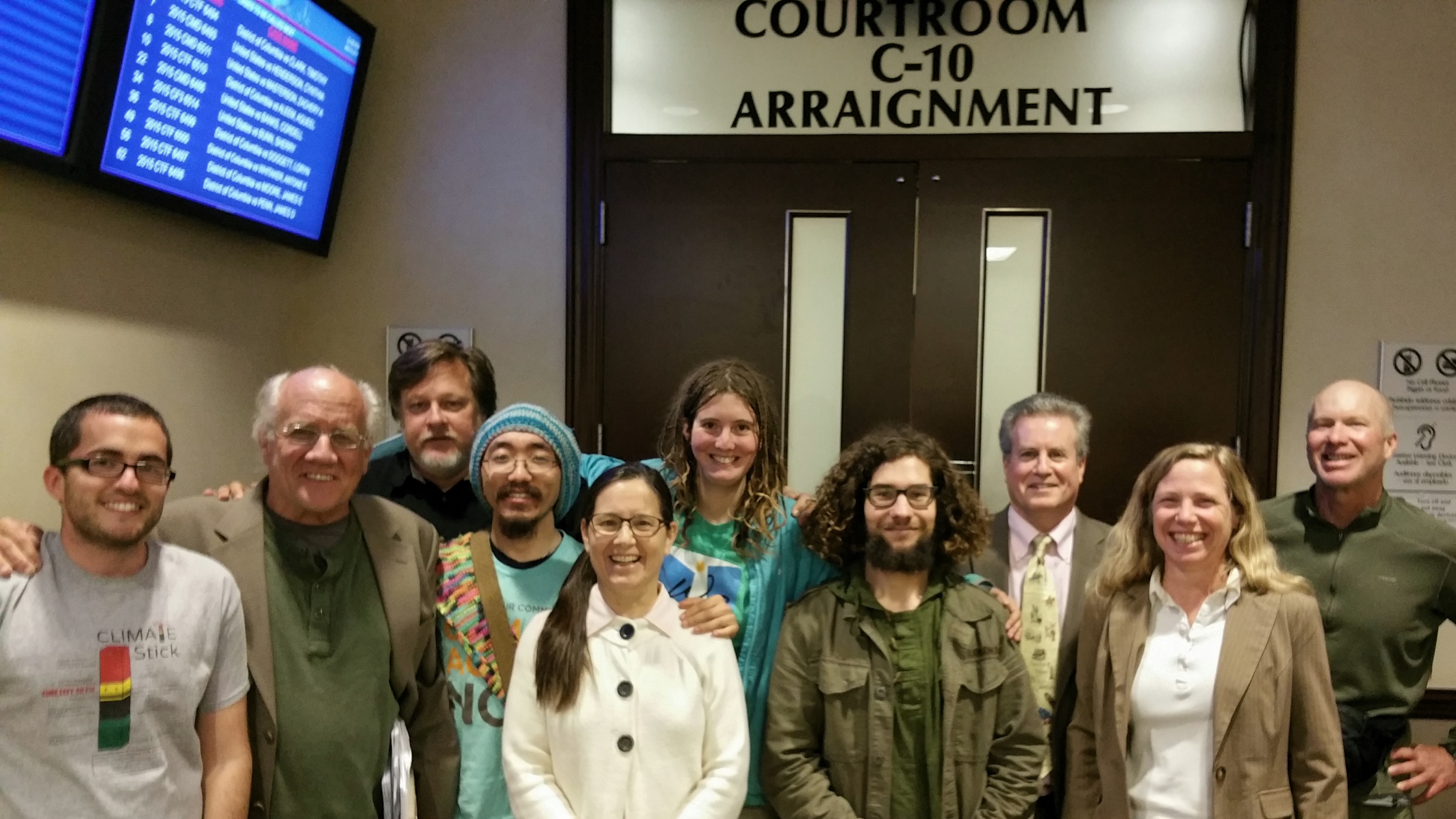
A member of Beyond Extreme Energy (BXE) who was arrested inside the Federal Energy Regulatory Commission building in May and charged with illegal entry was declared not guilty last week (Aug. 20) in a bench trial before Judge John F. McCabe Jr. in D.C. Superior Court.

In acquitting Laura Gubisch, a resident of the District, Judge McCabe chastised the government for how it handled the situation of people wanting to access the main room where commissioners meet, which in the past has been the site of verbal disruptions by members of BXE opposed to FERC’s approval of virtually every gas infrastructure project that comes before it, including interstate pipelines, compressor stations and LNG facilities.

As people filed through security, security personnel put blue dots on the identity cards of those FERC believed would be disruptive – peremptorily excluding many individuals who had never been inside the building before.

The higher than normal turnout of visitors was due to the fact that FERC moved up by a week its standard monthly commissioners’ meeting with the express purpose of preventing BXE members from attending its meeting. BXE put out an emergency call to get people – who come from the District, Virginia, Maryland, and throughout the northeast corridor — to attend.
The judge said the government could have handled the situation better, and that people should be given an opportunity to observe without disruption. If they are disruptive security could ask them to leave. But there was no evidence that Gubisch had gone to a place where she was told she couldn’t go, or that she refused to leave.

After the judge’s ruling, her attorney, Mark Goldstone, said, “All citizens should be given an opportunity under the First Amendment to observe their government at a public hearing.  They should not be preemptively deemed to be disruptive and shunted off to an overflow room to watch a public hearing on a TV screen. Laura Gubisch and other climate change activists were able to illustrate the anti-democratic response by FERC, which supports their charge that that agency is a captive of the oil and gas industry and is tone deaf in considering the views of citizens deeply concerned by the hazards of hydraulic fracking on the air and water in communities across the United States.”

Gubisch released the following statement: “The urgency of the terrible devastation created by our human actions require every citizen to take corresponding actions of integrity; everyone must step outside their comfort zone to salvage Mother Earth. The problem is not just FERC but a raft of undemocratic and destructive practices like fracking, eminent domain, government overreach to quell dissent, illegal surveillance and abuse – all are unnecessary and can be ended now. The good news is that we have clean ways to operate in this world, abundant sources of energy are all around us and each person has the capacity and responsibility to turn in this direction.”

Gubisch said she plans to file a civil suit against FERC.

Students Construct Banner For Upcoming BXE Action

301_9396
from left: Madison Early College students Evan Cannon, Patrick Alvey, Travis Davis, Anna Hamlin, Tucker McKinney, and Will Thomas (not pictured)

The Fast For No New Permits begins September 8th in Washington DC and communities around the nation. The Federal Energy Regulatory Commission (FERC) is the target of the Fast. FERC is the federal agency charged with oversight and permitting of energy infrastructure such as pipelines for fracked gas, compressor stations, and liquefied gas export terminals. In conjunction with Pope Francis’ climate-focused visit to the United States and the United Nations, fasters will demand that FERC stop issuing permits for costly, dirty, and outdated fossil fuel infrastructure in favor of cleaner, climate-friendly options like wind and solar.

Six sophomores from Madison Early College High School in Mars Hill, NC devoted part of a recent Saturday to making a banner for those fasting in DC to use at the FERC building each day in talking to FERC employees. The students were surprised and impressed to learn that many of the fasters have committed themselves to eighteen days of water-only fasting in order to underscore their message that fossil fuels must now be left in the ground if the world’s nations are to meet crucial—and non-negotiable—climate goals.

The students aren’t rookies, however, when it comes to taking action on climate. Last spring they assisted the We Are Cove Point campaign by constructing two twenty feet banners to help marchers in the residential community of Cove Point, MD try to stop Dominion Cove Point’s construction of a LNG export terminal there.

And they’re not finished yet. The students say when the next opportunity presents itself, they’ll again be ready to put their artistic skill to use in the fight for climate justice and their futures.

For more information about how you can also join the Fast For No New Permits either in Washington DC or in your local community, click here or inquire at actions@beyondextremeenergy.org.

Support the movement to #StopSpectra!

1507615_205546302976696_1618522776_nTogether we can #StopSpectra and the expansion of fracked-gas infrastructure in the Northeast.

a

a

a

FANG (Fighting Against Natural Gas) is a collective of folks who are fighting the fracked-gas industry at multiple points of destruction while also supporting other movements for justice. You can read about and support the good work they’re doing to stop the Spectra pipeline on their Indiegogo page:  https://www.indiegogo.com/projects/support-the-movement-to-stopspectra#/story

Activists arrested in Burrillville, RI for protesting gas expansion project

LockdownInBuvill

From RI Future.org, August 13th and 14th, 2015. Articles, photo, and video by Bob Plain and Steve Ahlquist.

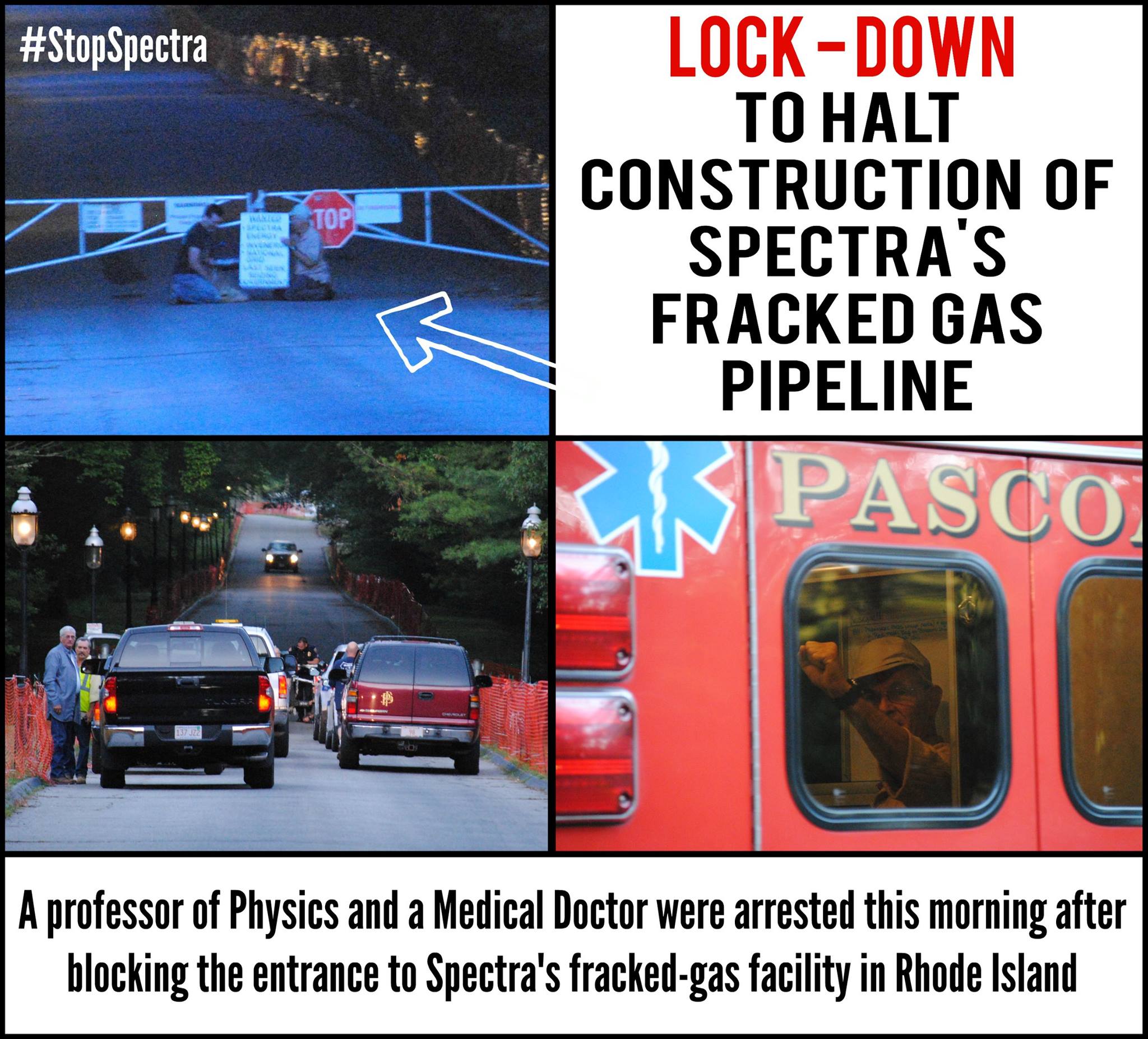
Police arrested two environmental activists arrested this morning who were protesting a methane gas pipeline project in Burrillville, Rhode Island, by chaining themselves to a gate at the project site.

“I’m taking action today because as a parent and being a pediatrician compels me to use any and all nonviolent means to stop this project,” said Nordgaard in a prepared statement.

Click here or here to read more about the actions of University of Rhode Island physics professor Peter Nightingale and Massachusetts pediatrician Curt Nordgaard.

PeterHauledOff

Thanks, Peter and Curt, for helping us all move beyond extreme energy!

Lyn Shaw Speaks Out About Northeast Energy Direct

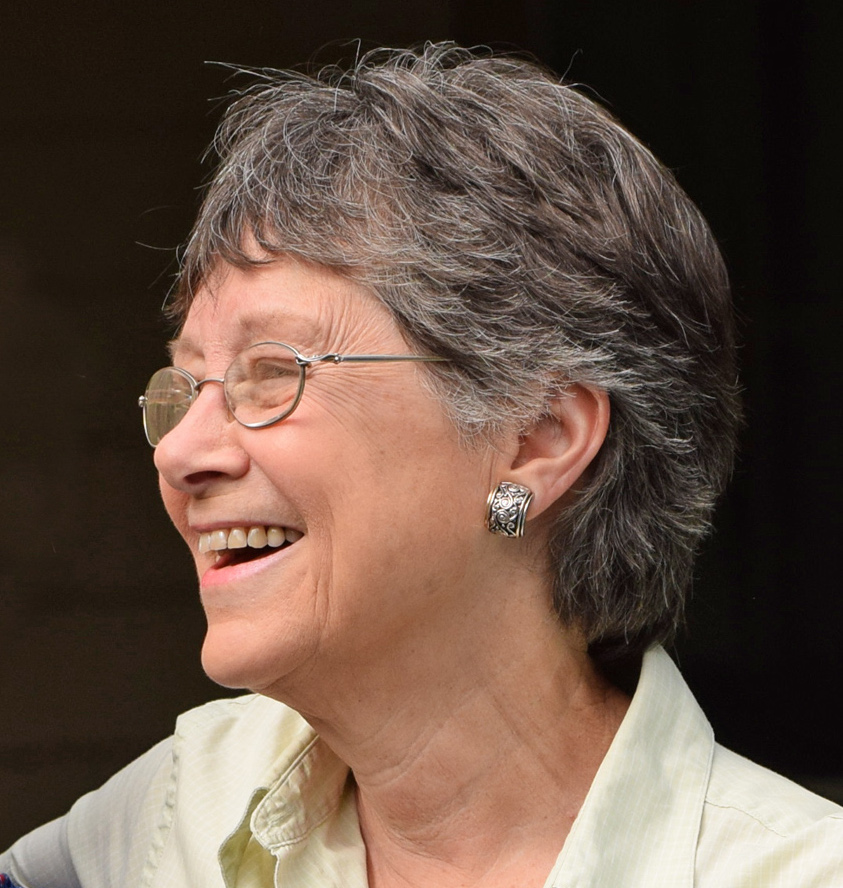
Comments provided by Carolyn Shaw of Middletown, CT 2014-06-30 cindy lyn 0138at a scoping meeting of the Federal Energy Regulatory Commission. The hearing, held at Central Connecticut State University in New Britain, CT was on Thursday, July 29, 2015. Subject of the hearing: the proposed expansion of the shale gas pipeline, Northeast Energy Direct, a project of Tennessee Gas and Kinder Morgan Energy.

Good evening. My name is Carolyn Shaw. I’ve lived in Middletown for close to 50 years.

As a woman of the Christian faith, I have been considering the moral implications of this scoping hearing and the Northeast Energy Direct project. I myself am directed less by facts and figures, troubling though they may be, than by the stirrings of my heart.

Like me, you may have heard the following verse from Psalm 8 in the Christian Bible many times: “When I consider thy heavens, the work of thy fingers, the moon and the stars…what is man that thou art mindful of him?”

Tonight I wonder… Aren’t we all infinitesimal parts of the great Universe mentioned by the psalmist? By virtue of the complex brains of our species, don’t we have the responsibility to be deliberate in all things? (As we raise our children and grandchildren? In the communities we choose to inhabit over the course of our lives? At our places of work and in our careers? On behalf of the Earth and of those humble species that cannot speak for themselves?)

With regard to this hearing and project I also wonder… To what extent, if any, should decisions made by individuals at the Federal Energy Regulatory Commission be exempted from the rigorous ethical parameters other people try to follow in their lives? And if they are to any extent exempted can and should that be changed?

For many months people and organizations have been reaching out to FERC attempting to comply in good faith with its processes, dutifully filing required documents and attending scoping hearings such as this one. No actions have lessened the number of permits granted or ensuing damage to the Earth. The necessity for increased moral reflection by FERC as it makes permitting decisions has become clear to me. I suggest that there be both Environmental and Ethical Impact Statements: the existence of these two types of EIS will encourage more balanced decision making. Decisions to approve permits will be made in a more balanced way. Two sides of the equation will be taken into account: the need to protect the Creation for which all humans are stewards and the need to exhibit the noblest of ethical behavior .

As FERC’s process stands now- in a system without balance- FERC is the Generator- Beginner of projects which, once given an official blessing in Washington, can be moved along to the states. When a project has been blessed by the five commissioners, all actors at FERC- from the Commissioners appointed by Congress to legal staff and support personnel- emphasize and give priority to the plans of and profits from requesting energy companies. The wishes of hundreds of people who have raised their voices in dissent again and again, people whose health and livelihoods have been enormously impacted, are given only slight consideration by offering token scoping hearings.

Two weeks ago I watched the videotape of a homeowner’s impassioned plea before a meeting such as this one in Massachusetts. She and her husband own a house on 22 acres of a beautiful state forest. As birders, they have counted over 50 species on their property. The home has been their lifelong dream. Spectra Energy’s plan to site a compressor station 1500 feet from their property line, permitted by FERC, has suddenly put them into an untenable position: no one will buy their house once the land has been ruined; even if a buyer could be found, no mortgage company would grant a loan on their compromised property. After years in their home she and her husband will have to leave it. At the end of her testimony she fell to her knees and begged. Were not ethical choices made here, choices with human consequences?

I will guess that by now you know my bias has emerged. I like to think that I take the side of the God who created us all and expects much from us in return.

From poet and writer Wendell Berry, two stanzas of his poem, “Questionnaire”:

How much poison are you willing to eat for the success of the free market and global trade? Please name your preferred poisons.

In the name of patriotism and the flag, how much of our beloved land are you willing to desecrate? List in the following spaces the mountains, rivers, towns, farms you would most readily do without.

Final thoughts: As adults we make hundreds of choices, weighing possibilities. Despite the politics, despite the lobbying from oil and gas companies, despite peer pressure from those around you, my hope is that each person leading this scoping meeting will choose to be the greatest possible version of him or herself. Listen to your mandate as an ethical human being. Whether you work on First Street in Washington or represent the agency in other parts of the country let the moral dimensions of your choices rise to the surface of your minds like bubbles as you live out your days.

Again from Psalm 8: “For thou hast made him a little lower than the angels and hast crowned him with glory and honor. “

Thank you.